Harnessing the Power of Exercise: A Holistic Approach to Boys’ Mental Health


Friends, we’re living in an era where our world is expanding and competition is intensifying – not just within our own neighborhoods, but on a global stage. Our American kids are battling it out with bright minds from India, China, and beyond for jobs and resources. It’s no wonder we’re eager to offer our children every possible advantage.

You want your child in the best schools, soaking up knowledge, sweating hard work, and acing those report cards. You want them to head into the world armed with the tools to conquer whatever challenges they face. So, if your boy is having difficulty staying focused, it’s only natural to consider medication that promises to boost concentration. If a doctor recommends it, it must be safe, correct?

However, we must pause and question – are there alternative routes to this destination? Have we, as a collective, tacitly decided to medicate our kids with stimulants in an effort to edge out the competition? Is this really the optimal path we want to tread?

I believe it’s crucial to remember that boys, by their very nature, are bundles of energy. Maybe our focus needs to shift towards creating more opportunities for physical activities for our young ones. This could be the transformative change our children need, and it might just set them on a healthier, more balanced path to success.

I recently stumbled upon a study that illuminated the compelling efficacy of physical exercise in treating depression and anxiety, it resonated with me deeply.  We’re all aware of the physical advantages of exercise, but its psychological benefits are often overlooked. It releases endorphins, our brain’s natural mood elevators, making exercise a kind of natural antidepressant.

But just how effective is exercise compared to medication when it comes to mental health?

A meta-analysis led by Cooney et al. in 2013 drew an intriguing conclusion: exercise can be a potent remedy for depression, with effects similar to antidepressant medication. Equally fascinating, a study by Wipfli, Rethorst, and Landers[^6^] indicated that exercise significantly alleviates symptoms of anxiety.

So why am I so fixated on exercise as a first-line treatment, especially for young boys?

Well, it’s simple. First, physical activity instills healthy lifestyle habits that can protect against various health complications down the line. It improves self-esteem and body image, critical to a young boy’s mental well-being. And let’s not forget the undeniable stress relief and social interaction it provides, especially with team sports.

Now, the important thing here is not to demonize medication. It has its place, and it has proven to be a lifeline for many. But as fans of my work know, I’m always in pursuit of methods that offer broad, systemic benefits with minimal side effects. And here, my friends, exercise outshines medication. It provides lasting benefits that extend far beyond the cessation of an exercise routine, unlike medication whose effects typically wear off once it’s discontinued.

In conclusion, our objective isn’t just to manage symptoms, but to empower boys to grow into healthy, balanced adults. The role of exercise extends beyond immediate relief and instills a habit of wellness that can shape a lifetime. It’s high time we lace up our running shoes before reaching for the prescription pad.

Remember, this is a complex issue, and professional consultation is always key. Exercise should be viewed as a powerful supplement to a treatment plan, not a replacement for professional help when it’s needed.

  1. National Institute of Mental Health – Anxiety Disorders: https://www.nimh.nih.gov/health/topics/anxiety-disorders/index.shtml
  2. Medical News Today – Exercise vs Medication: https://www.medicalnewstoday.com/articles/is-exercise-more-effective-than-medication-for-depression-and-anxiety
  3. Mayo Clinic – Exercise: 7 benefits of regular physical activity: https://www.mayoclinic.org/healthy-lifestyle/fitness/in-depth/exercise/art-20048389
  4. WebMD – Exercise and Depression: https://www.webmd.com/depression/guide/exercise-depression
  5. Cooney et al. – Exercise for depression: https://www.ncbi.nlm.nih.gov/pmc/articles/PMC3772979/
  6. Wipfli, Rethorst, Landers – The Anxiolytic Effects of Exercise: A Meta-Analysis of Randomized Trials and Dose-Response Analysis: https://pubmed.ncbi.nlm.nih.gov/18785356/
  7. Centers for Disease Control and Prevention – Benefits of Physical Activity: https://www.cdc.gov/physicalactivity/basics/pa-health/index.htm
  8. HealthyChildren.org – Physical Activity Improves Quality of Life: https://www.healthychildren.org/English/healthy-living/fitness/Pages/Physical-Activity-Improves-Quality-of-Life.aspx
I have never had to use Shakespeare – A focus on REAL Life Skills

As a grown man, there are a lot of life skills that you are not taught in school. This is unfortunate. Never in my life have I had to use Shakespeare, never. However I spent hours and hours in class and outside of class reading and analyzing his writing.

Maybe, just maybe, it’s time to start thinking about teaching life skills first and liberal arts skills last. Education should be approached like Maslow’s Hierarchy of needs. Maybe we should teach people how to survive before trying to get to enlightenment. Schools are taking the wrong approach.

Over the next series of HTBGM, we’re going to focus on life skills. I think the following 10 life skills are a great place to start. Let’s get you focused on the things that matter and save Shakespeare for a depressing, rainy, English day!

  1. Financial management: Budgeting, saving, investing, and managing debt.
  2. Health & Fitness: How to feed yourself and take care of your body
  3. Communication: Verbal and nonverbal communication skills, as well as the ability to listen actively and effectively convey ideas.
  4. Problem-solving: The ability to identify problems, generate solutions, and make decisions.
  5. Conflict resolution: This includes the ability to handle conflicts and disputes in a constructive and meaningful way.
  6. Interpersonal skills: This includes the ability to establish and maintain relationships with others, as well as to work effectively as part of a team.
  7. Survival Skills: How to take care of yourself when there’s no one else to take care of you and / or when shit goes down.
  8. Business Skills: How to survive and thrive at the workplace.
  9. Basic home maintenance: This includes skills such as changing a tire, fixing a leaky faucet, or replacing a light fixture.
  10. Emergency preparedness: This includes knowing how to respond to emergencies and natural disasters, and having a plan in place for these types of events.

How would you explain Baseball to an Alien?

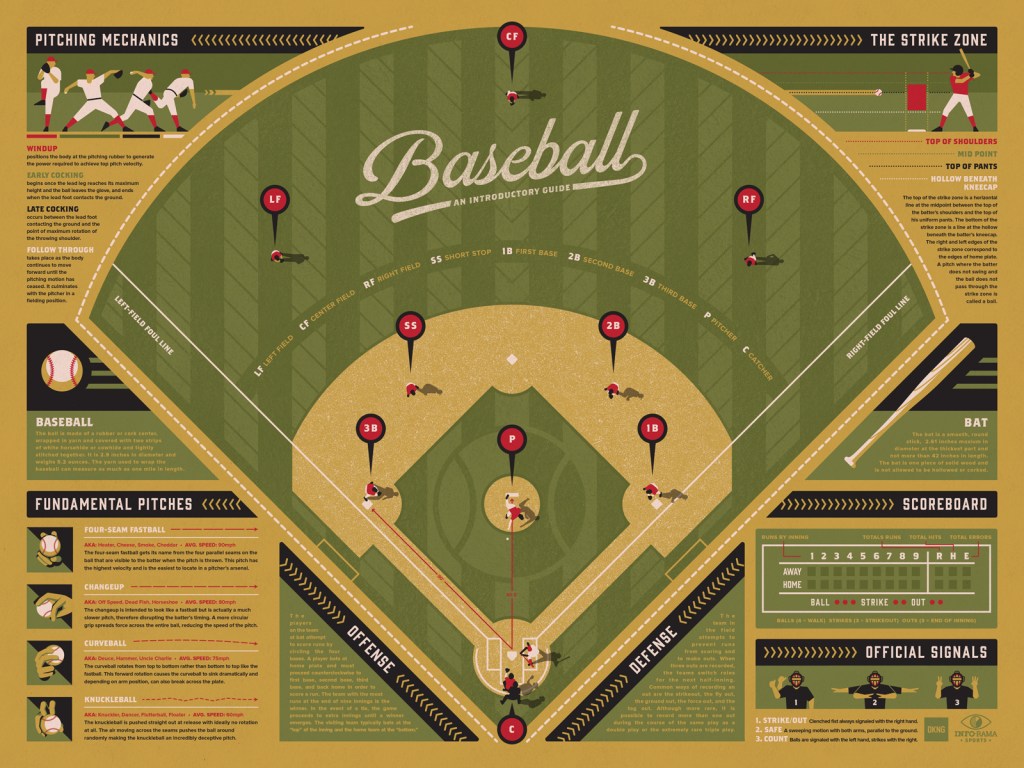
Baseball is a game played between two teams of nine players each. Each team takes turns batting and fielding. The batter stands in the batting box and tries to hit the ball thrown by the pitcher from the other team. If the ball is hit, the batter runs around the four bases in a counter-clockwise direction to score a run. The team with the most runs at the end of nine innings (when each team has had a chance to bat and field) is the winner. 

The teams that are in the field are divided into two groups. The first group is the infielders. Infielders are positioned around the inner edge of the diamond-shaped playing field. They include the pitcher, catcher, first baseman, second baseman, shortstop, and third baseman. The second group is the outfielders. Outfielders are positioned around the outer edge of the diamond-shaped playing field. They include the left fielder, center fielder, and right fielder. The third group is the designated hitter. The designated hitter is a player who bats in place of the pitcher.

The game is timed by Innings.  An inning is a rotation of both team fielding and batting.  The home team bats in the second half of the inning and the away team bats in the first half of the inning. In the course of an inning a team bats until there are 3 outs. A batter or player is deemed out when a defender gets the ball to another defender prior to an offense player reaching a base or a defender catches the ball after a hit prior to the ball touching the ground. Three outs in an inning ends a team’s chance to score, and three strikes on a batter also results in an out. A strike is called when a batter does not swing at a pitch and it is within the strike zone, while a ball is called when a pitch is outside the strike zone. A strike is also when a player swings at a pitch and misses.  The opposite of this is a ball (not to be confused with the object that’s thrown around).  If a pitch is thrown outside of the agreed upon zone, the batter is rewarded with a free look.  If a batter has 4 of these, they go to first base without having to make a hit.  

Baseball is a game full of nuance and outlying strategies.  Here are a few things you could see in every game.  

  • Stealing bases – A runner can attempt to advance to another base if the pitcher does not throw the ball in time. 
  • Force outs – When a runner is on a base, a fielder can force the runner out by throwing the ball to the base the runner is attempting to reach. 
  • Hit and run – The hit and run is a strategy where the runner attempts to advance while the batter attempts to hit the ball. 
  • Bunting – Bunting is an offensive strategy where the batter attempts to hit the ball in a way that it rolls slowly toward the infield, allowing the runner to advance. 
  • Pitching – Pitchers are able to throw the ball and have the ball do different movements.  They could throw it super fast and straight.  They can make the ball curve.  They can make it move without rotations.  All of these movements are designed to confuse the batter.

Baseball is also a game of numbers and stats.  A few statistics regularly followed are below.

  • Batting Average (BA): The number of hits divided by the number of at-bats. 
  • On-Base Percentage (OBP): The percentage of the time a batter reaches base safely, regardless of how he got there (hit, walk, hit by pitch, etc.). 
  • Slugging Percentage (SLG): The total number of bases (singles, doubles, triples, home runs) divided by the total number of at-bats.
  • On-Base Plus Slugging (OPS): The sum of a player’s on-base percentage and slugging percentage. 
  • Earned Run Average (ERA): The average number of earned runs a pitcher allows per nine innings. 
  • Walks Plus Hits Per Innings Pitched (WHIP): The average number of walks and hits allowed by a pitcher per nine innings. 
  • Strikeouts Per Nine Innings (K/9): The average number of strikeouts a pitcher has per nine innings. 
  • Win-Loss Record (W-L): A pitcher’s total number of wins and losses. 
  • Quality Start (QS): A start in which a pitcher goes at least six innings and allows three

Baseball is popular in many countries, especially in the Americas. In particular, it is a popular sport in the United States, Canada, Japan, the Dominican Republic, Cuba, Mexico, Puerto Rico, and Venezuela. It is also popular in several countries in Central and South America, as well as in some countries in Asia and the Caribbean.  I hope this primer will help you understand this beautiful game.

Keys to Coping:  7 Technique to help with Stress Management

        Tell me if this has happened to you? You’re sitting with your hands tightly gripped to the steering wheel, your stress level rising by the second.  You have exactly five minutes before you have to get to daycare, and there’s an accident creating traffic.  After you pick up your child (who may or may not have kept you up all night), you’ll have to go to the supermarket, rush home for dinner, bathe baby, put him or her to bed and then you have the rest of your life you have to manage!

          Life can be highly stressful.  The good news is that there are techniques you can use in order to bring your stress level under control.  Following is 6 ways to avoid both situational and general life stress:

  1. Rehearsing. 
    • Let’s say you are preparing for a job interview.  You can role play, with your spouse, roommate or friend playing the part of the interviewer and you as the interviewee.  In this way, you can practice your answers to likely questions.  Knowing what to expect in advance can help you to control your stress level in the actual moment.
  2. Empathetic Framing:
    • Let’s suppose you have had a disagreement with your co-worker.  You’re worried that you will never be able to enjoy camaraderie with your co-worker again.  Now, you’re freaked out that you’ve burned a bridge.  You’ll be much better off if you see the disagreement as a challenge you must simply work your way through.  Look at the debate as a discussion between two intelligent people.  Try your best to see the other person’s perspective.  In this way, you’ll be engaging in problem-solving rather than complaining, and your stress may be reduced because of it. 
  3. Anger Management: 
    • It is often not a particular situation, but your reaction to it, that causes your stress level to climb.  I remember Rage Against the Machine once claimed, “Anger is a gift”. I must disagree! Don’t let your anger control you. You have a choice to be angry or not, choose not. Anger is a choice. Your reaction to circumstance is a choice. Our ability to navigate this is what separates us from animals. Choose the way of solution vs anger and your stress will fall away like pounds after an Insanity workout!
  4. Try your best to curtail negative thinking:
    • Whenever a negative thought comes to mind, think the exact opposite positive version of that thought and stick with it.  Or if all your thinking is negative, just try to stop thinking. I’ll literally tell myself, stop thinking, stop thinking.  The idea here is to put an end to negative thinking—to, in effect, put it on the shelf so that you don’t have to worry about it.  You’ll be surprised how relaxed you feel, once you stop engaging in negative thinking. 
  5. Remember you are a 1 of 1:
    • Self-esteem matters.  Being hard on yourself can produce a great deal of stress.  Once you recognize that you are a person worthy of love, you will be better able to cope with the stressors that come your way. 
  6. Exercise:
    • It’s a proven fact that individuals who exercise have better outlooks on life. Go watch Legally Blonde if you need a reminder!
  7. Set and accomplish goals for yourself.  
    1. Perhaps you’ve always wanted to knit.  Now is your golden opportunity.  Or maybe you’d like to run a marathon by the end of the year (this is one I did and changed my life).  The important thing is to set goals, to commit to them and go out and achieve them.  Once you reach your goal, you will likely feel on top of the world.  As you make progress toward your goal, you could find your stress level subsiding.    

        Stress relief is an on-going process.  You can’t expect to reduce your stress-level permanently in one day.  But, by taking the steps listed above, you might find yourself better able to deal with stress on a daily basis.  Remember that you may not be in complete control of what happens to you on any given day, but you can control your reaction to it.  By focusing on the positive, putting an end to negative thinking, and setting goals for yourself, you should find your stress level declining.  With less stress to worry about, you’ll find that life is more enjoyable.  Even that daily commute to the day care center might become more tolerable.  

Don’t Skip Leg Day – Doing the Hard Shit that Matters (and 12 hard things you can start doing now)

I hate leg day.  It’s my least favorite workout of the week.  Squats suck, lunges suck, any workout with an eastern european country’s name attached to it, (I’m looking at you Bulgaria) suck.  

All of that said, no other day promotes body symmetry, fat loss, functional movement, joint health, body composition and muscle conditioning better than leg day.  Skipping leg day means you are going to miss all of these benefits.  If you are going to work out and take care of your body, why would you half ass it?  It makes no sense, you can’t skip leg day!

I like to think of things that are easily avoidable, but detrimental if avoided, as leg day items.  What am I skipping or not doing or doing that is an act of avoidance that I should be doing and confronting head on?

What are a few tough things in life that are like leg day?  What are the necessary tasks that must be done to help you make the most out of your life?  What are often the hard things to do that if not done, will create imbalance, mental and physical deterioration and  lead to a life lived without meaning?  I’ve listed 12 below and have added the why in a list below this list (I know, totally Meta!)

  1. End toxic relationships (this could be a friend, a significant other, a job or a supervisor)
  2. Learn a new skill
  3. Question the assumptions (especially your own and those within your own echochamber)
  4. Saving instead of Spending and investing those savings for gratification delayed
  5. Watching what you eat and not regularly overindulging 
  6. Reading (or listening if that’s your jam)
  7. Learning how to communicate to other individuals, groups and crowds
  8. Making new friends as an adult
  9. Meditating and being present
  10. Volunteering, Serving or Contributing to a cause
  11. Creating something new and publish, launch or display it for the world to see
  12. Be Constantly honest, to yourself and others

What are you going to get out of doing all of the things above?  Let’s take a look and see.

  1. End toxic relationships (this could be a friend, a significant other, a job or a supervisor)
    • Toxic relationships are relationships that have more negative benefits than positive benefits.  They’re the relationships that if you were to look in from the outside, you’d ask, why is that person in this relationship?  
    • If you are a nice person, these can be especially hard to get out of because you don’t want to offend.  WHO CARES!  GET OUT!
    • Stop calling this person, stop answering this person’s calls or texts and get out.  If this is going to affect other relationships, get out of them as well.  We have 80 – 100 years on this planet and there are BILLIONS of people you can associate with.  Get out of your fear bubble and find people who will bring you up, not down.  They’re out there.
  2. Learning New Skills
    • First, there is scientific evidence that learning new skills consistently throughout your life decreases your risk of dementia later in life.  
    • The more skills you have, the more people are going to want to be around you because you’re an interesting person who knows how to do shit.
    • The more skills you have, the more opportunities you will be presented in life
  3. Questioning Assumptions (Especially your own)
    • Here are examples of common assumptions folks once believed
      1. The Earth is flat
      2. The Earth is the center of the universe
      3. Humans will never figure out flight
      4. Humans catch warts from licking toads
      5. Thomas Crapper invented the toilet (I was bummed this wasn’t true)
  4. Saving instead of Spending and investing the savings
    • You will never get rich by earning and spending, you need to create your own avenue to compound your dollars
      1. Buy stocks that pay dividends
      2. Buy businesses that produce cash flow
      3. Buy homes and rent them out
  5. Watching what you eat and not overindulging
    • If you don’t want diabetes, congestive heart failure or other diseases that are caused by being overweight, don’t overindulge.  Abs are made in the kitchen, brah!
  6. Reading
    • It’s been said that the average CEO reads upwards of 60 books a year and the average worker reads one.  
      1. I don’t know if the above statement is true, but I’ll stand by the fact that reading and constantly inputting information in your mind that is designed to educate will get your further
  7. Learning how to communicate
    • Unless you are an individually brilliant performer that is once in a generation at whatever skill you do, you are going to need to communicate at some point!  Warren Buffet once said the greatest investment he ever made was in a Dale Carnegie public speaking course.  
    • To get what you want in this life, you are going to have to communicate well with others.  If you don’t do this naturally, it’s a skill that can be learned, no matter how painfully shy you may be.
  8. Making new friends as an adult
    • Your network is your net worth.  Don’t be stuck.  Making friends as an adult can be hard.  It’s easier to stay in your shell.  It’s easier not to risk rejection. It’s also incredibly rewarding to surround yourself with people who help you become the best version of you, always!  
    • Talk to people, invite folks into your life that you admire and take the risk.  Personally, all of my best friends have been made as an adult!
  9. Meditating and being present
    • Researchers at the Columbia University Medical Center claim meditating can change the structure and function of the brain through relaxation, which can: Reduce stress, anxiety, depression, increase focus, learning concentration, improve memory and attention span.
  10. Volunteer, Serve or Contributing to a cause
    • There are myriad benefits to paying it forward in life.  However, none more so than the sense of self that is built from it.  When you live life to serve a purpose greater than yourself, it brings the rest of your being up with it.  
    • Studies have also stated that service can help increase self-confidence and life satisfaction, combats depression and even helps you stay physically healthy.
  11. Create
    • Creativity has a compounding effect.  When you create once, you’ll create again and again.  You’ll find that if you create in your spare time, you’ll be more creative in your work, with your family and you’ll get bored less often!  
    • You can also parlay your creativity into additional income streams.  You could create a business, publish a story or find new friends through new interests.
  12. Be Constantly honest, to yourself and others
    • There are few benefits to lying.  In fact, it’s advice that goes as far back as the 10 commandments, rules followed by the 3 Abrahamic religions of Judaism, Christianity and Islam.  
    • Many of the most successful investors and business people today practice “radical transparency” which is extreme honesty.  It’s a practice that continues to create successful people and is still to this day, is hard to follow!

Now go do some hard shit and remember, don’t skip leg day!

5 Recipes You Can Build Your Cooking Skills On

Being a grown up means it’s time to start cooking for yourself and others.  Throughout my 20’s, I played around with food a little bit, but wasn’t very serious about it.  It wasn’t until my late 30s that I learned how much love you get both from others and in your soul, when you make a great meal.  If you discover this secret earlier than me, you will also discover it’s blessings earlier!  It really is a treat to watch others enjoy something you put work into and it’ll also keep you invited back!  

Below are 5 recipes you can use to start your cooking adventure.  We hit breakfast, lunch and dinner!  We’ll pan fry, we’ll use the oven, we’ll use some spices and herbs and we’ll enjoy a tasty meal after! I’ll save my sticky buns and cinnamon buns for another time.  

Bacon, Potato Egg Casserole 

Ingredients

  • ½ pound thick-cut bacon, Cooked and Crumbled
  • ¼ cup olive oil 
  • 1½ pounds russet, yellow or Yukon Gold potatoes, unpeeled, sliced ¼-inch thick pieces
  • 1 large yellow onion, thinly sliced into rings
  • Kosher salt and freshly ground pepper to taste
  • ½ Tablespoon Organic Curry Powder
  • 10 large eggs 
  • 6 ounces shredded Cheddar, sharp Cheddar or Monterey Jack

Step by Step

  1. Heat oven to 375 degrees. Cook bacon in a 12-inch skillet over medium-high heat until crisp and the fat has rendered out, 4 to 5 minutes each side. Remove from the skillet, leave the fat behind.
  2. Add olive oil, potatoes and onion slices to the skillet. Season with curry powder, salt and pepper and cook, stirring occasionally until the potatoes are tender and start to brown, and the onions are golden brown, 20 to 25 minutes. Return bacon to skillet and stir to combine so that everything is distributed evenly.
  3. In a large bowl, whisk eggs together and season with salt and pepper. Add cheese and whisk to blend. Transfer potato mixture to a 9” x 13” baking dish and pour egg mixture over. Place in oven and bake until eggs are puffed around the edges and just set in the center, 15 to 20 minutes.
  4. Remove from heat and let cool slightly before eating. Serve with your favorite hot sauce for added flare

Sheet Pan Sausage and Veggies

Ingredients

  • 1 pint grape or cherry tomatoes, halved OR 1 large / 2 medium whole tomatoes cubed
  • 1 head broccoli florets cut from stem
  • 1 yellow squash sliced 
  • 1 whole onion diced in large pieces
  • 1 package your choice mushrooms, trimmed and halved (1/2 pound)
  • ¼ cup olive oil, plus more as needed
  • 1/2 teaspoons dried oregano
  • 1/2 teaspoon dried tarragon 
  • 1/2 teaspoon dried basil
  • 1 teaspoon red-pepper flakes
  • Kosher salt
  • 1 pound spicy or sweet Italian sausage (fresh sausages removed from casing)
  • ¼ cup plus 2 tablespoons grated Parmesan or manchego, plus more for topping after cook

Serve with Garlic Bread (you can be lazy and buy at store) or on Rice

  1. Heat the oven to 400 degrees with one rack in the lower third and one in the upper. 
  2. On one sheet pan, combine the tomatoes, broccoli and mushrooms with ¼ cup oil. Season with ½ of your herbs and red pepper flakes and salt to taste. Toss to combine and mind your presentation (make sure everything is spread out). Roll the sausage into 1-inch balls. (There should be 25 –  30.) Distribute them around the vegetables.  Season remaining herbs and red pepper flakes. Sprinkle the entire sheet pan with 2 tablespoons of your chosen cheese. Roast for 15 minutes.
  3. After 15 minutes, gently shake the pan to flip the meatballs. Sprinkle the entire pan with the remaining ¼ cup cheese, concentrating your on the tomatoes and the empty pan edges so that some Parmesan has room to crisp. Return the meatball sheet pan to the lowest rack.  If you are making bread, this is when you’ll add the bread to the oven. Roast until the bread is golden at the edges, the broccoli tips are crispy and the meatballs are cooked through, (depending on bread, most likely 7 to 10 minutes). (If the broccoli and meatballs need a little more time, remove bread and give them 5 more minutes and they should be good to go!)
  4. Use a wooden spoon or spatula to scrape up any cheese that has stuck to the bottom of the pan. Serve everything with the garlic bread or rice and more grated cheese.

EGGPLANT PARMIGIANA 

Recipe by Matty Matheson 

Ingredients for the tomato sauce:

  • ½ cup|120 ml olive oild
  • 9 garlic cloves – thinly sliced
  • 1 medium yellow onion diced
  • 3 tablespoons tomato paste
  • 3 (28-ounce|794-gram cans) whole peeled tomatoes crushed by hand
  • kosher salt and freshly ground black pepper, to taste

for the eggplant parmesan:

  • 3-4 medium eggplants – peeled and sliced lengthwise into ¼-inch pieces
  • 2 cups | 300 grams all-purpose flour
  • kosher salt and freshly ground black pepper, to taste
  • 6 large eggs lightly beaten
  • 4 cups | 500 grams bread crumbs
  • 1 ¼ cups | 296 ml olive oil
  • 1 cup | 237 ml canola oil
  • 4 cups | 946 ml tomato sauce
  • 1 ½ pounds | 680 grams sliced Mozzarella cheese
  • 1 bunch fresh basil leaves
  • 1 cup grated parmesan cheese

Directions

1. Make the tomato sauce: Heat olive oil in a saucepan over medium. Add the garlic and onion and cook until translucent and fragrant, about 5 minutes. Stir in the tomato paste and cook for 5 minutes. Add the tomatoes and bring to a boil. Season with salty and pepper and remove from heat.

2. Place flour in one large shallow dish. Season with salt and pepper. In another shallow dish, mix the eggs with ½ cup water. Place the bread crumbs in a third shallow dish. Working with 1 slice of eggplant at a time, dust it in the flour, coating it all over, then dip in egg wash, then place in breadcrumbs to coat. Repeat with the remaining slices.

3. Heat 1 cup of olive oil and the canola oil in a large frying pan over medium-high. Working in batches, cook the eggplant, flipping once, until golden brown, about 1 minute per side. Transfer to a rack set over a baking sheet and season with salt.

4. Heat the oven to 450°F. Ladle ½ cup tomato sauce on the bottom of a 9-by-13-inch casserole dish. Arrange a layer of fried eggplant into the dish, then layer mozzarella slices on top to cover. Spoon over 1 cup of tomato sauce then scatter 6-7 basil leaves on sauce. Arrange another layer of fried eggplant slices in the opposite direction. Repeat layers 3 more times ending in mozzarella. Sprinkle parmesan over surface of the top layer then drizzle with the remaining ¼ cup olive oil. 

5. Bake until the cheese is browning and bubbling, 20 to 25 minutes.

Reverse-Sear Steak with mushrooms and asparagus 

Ingredients

  • 1 thick rib eye steak or NY Strip, 2 in (5 cm) preferably USDA prime and well marbled (IE Fatty)
  • 1 teaspoon salt, to taste
  • 1 teaspoon pepper, to taste
  • 3 tablespoons high smoke point oil (Avocado choice 1 – sunflower choice 2 – canola choice 3)
  • 2 tablespoons butter
  • 2 cloves garlic, peeled and smashed
  • 2 sprigs fresh rosemary
  • 3 sprigs fresh thyme
  1. Preheat oven to 200°F/95°C.
  2. Pat the steak dry with a paper towel, and generously season all sides of the steak with kosher salt and fresh ground pepper.
  3. Transfer to a wire rack on top of a baking sheet, and bake for about 45 minutes to an hour, until the internal temperature reads about 125°F/50˚C for medium-rare.  If you have a bread stone, place meat right on stone.
  4. Heat the oil in a pan (preferably cast iron) over high heat until smoking. Do not use olive oil, as its smoke point is significantly lower than than the other oils and will smoke before reaching the desired cooking temperature.
  5. Sear the steak for 1 minute on one side, then flip.
  6. Add the butter, garlic, rosemary, and thyme, and swirl around the pan. Transfer the garlic and herbs on top of the steak and baste the steak with the butter using a large spoon.
  7. Baste for about 1 minute, then flip the steak with tongs and baste the other side for about 15 seconds.
  8. Turn the steak on its side and cook to render off any excess fat.

Mushrooms and onions 

  • 1 onion, cubed
  • 1 package cremini or portobello
  • Salt to taste 
  1. In pan with steak oil and butter, rosemary and garlic, head to medium, add onions and cook to brown 
  2. Add mushrooms and cook until they tender and fragrant, about 15 minutes 
  3. At finish, add black pepper, parsley and salt to taste, off heat

Asparagus 

2 cheats – snap off the bottom and peel the stalk

Here’s a simple method for roasting asparagus that requires olive oil, salt and pepper.  That said, 

  1. Heat your oven to 425 degrees
  2. Dress asparagus spears lightly with olive oil and season with salt and pepper. 
  3. Spread them on a baking sheet or in a roasting pan in one layer and roast until lightly browned and sizzling, and just firm-tender. 
    1. baking sheet, that should take 10 to 12 minutes
    2. heavy-bottomed roasting pan for about 15 minutes. 
  4. The trick here is getting the spears nicely colored without overcooking them, and you should always err on the undercooked side — asparagus will continue to cook off the heat

*You can add other spices as well: cayenne, paprika, red pepper flakes or smoked salt. Or try chopped pecans, a sprinkle of grated Parmesan and a drizzle of balsamic vinegar.

Best damn tuna melt recipe (makes 4 big sandwiches)

Recipe from NYTimes cooking

Ingredients

  • 3 (6-ounce) cans solid, water-packed tuna, drained
  • ¾ cup mayonnaise
  • ¼ cup finely chopped cornichons or small kosher dill pickles
  • 3 tablespoons minced shallot
  • 2 tablespoons lemon juice
  • 1 packed tablespoon minced fresh dill
  • 2 teaspoons whole-grain mustard or dijon mustard
  • ⅓ teaspoon kosher salt
  • ¼ teaspoon fresh cracked black pepper
  • 8 slices sourdough bread, cut to your liking or from loaf
  • 8 sandwich slices extra-sharp Cheddar
  • 4 tablespoons softened unsalted butter, plus more as needed
  1. Place the tuna in a medium bowl and flake with a fork. Add the mayonnaise, cornichons, red onion, lemon juice, dill (if using), mustard, salt and pepper. Mix well.
  2. Depending on the size of your bread, spoon ⅓ to ½ cup tuna salad on each of four slices of bread, heaping it in the middle slightly. Divide the cheese among the sandwiches, tearing and arranging the cheese to fit neatly. Place a piece of bread on top of each and generously spread the top piece of each sandwich with about ½ tablespoon butter.
  3. Heat a 10-inch skillet over medium-low. Place two sandwiches, buttered-side down, in the skillet, and cook for 3 to 4 minutes, until the bottom pieces of bread are golden brown.
  4. Spread the top of each sandwich with another ½ tablespoon butter. Carefully flip the sandwiches, turn the heat to low, and cook for 3 to 4 more minutes, until the bottoms are browned and the cheese is melted. Repeat with the remaining two sandwiches and serve immediately.

A Workout Routine You Can Always Fall Back Into

Fitness is a lifestyle.  All you need to do is give 1 of your 24 hours a day to your health.  There is no excuse, there is only health.  Without health, you will die.  Give this hour to yourself and live a better, happier life.

Throughout life, you should have different physical goals and try to accomplish things you’ve never tried.  Train for a marathon (I’ll have a post later about my 3 month 5K to Marathon training), go rock climbing, do a martial art or compete in sports.  Compete in team sports and compete in one on one sports.  It keeps you sharp and again, happy.

I’ve personally found that between times that I’m training for a specific goal, I easily fall into training lulls.  I’ll go to the gym without a purpose or plan.  That’s when workouts become cumbersome, ineffective and sometimes, pointless.  What I’ve found however, is that trying to get stronger has never served me wrong.  Below is a routine that I once spent a year doing and have found that is an incredibly easy routine to do for short or long term periods between training for goals and also, show results.

The routine is anchored in Bench Press, Barbell Squat and Dead Lift.  There are also days for your ancillary muscles, shoulder and arms.  If you are in your 20s, you should be working out 5 days a week.  I’m 42 and maintaining a 5 day a week gym schedule 80% of the time.  You could get away with doing just 3 days a week and I’d recommend simply doing Chest, Back and Legs if so.  I’d also ask you to do 2 days of cardio. My compromise when necessary is 4 days.  

It’s important to maintain your physical health.  If you do not, you are more likely to die of diseases that can be avoided.  Maintaining good physical health is a powerful kicker for your mental health as well.  Every time you exercise, endorphins are released.  An active lifestyle is guaranteed to make you happier.

Each workout below is going to take about 40 minutes if performed properly.  Properly means taking 2 minutes between reps, lifting with proper form and as heavy as you can to get up to 5 reps.  That leaves 20 minutes for cardio at the end.  Here’s how I split up my cardio days personally.  

  1. Walk Backwards on the treadmill – great for knee health and explosiveness.  Start slow (3 MPH) and move up 0.1 or 0.2 MPH per week until you max out.
  2. Run and keep your forefoot form.  Start slow (4 MPH) Move up 0.1 or 0.2  MPH per week until you max out.
  3. Stairs – Run up and down stairs for 20 minutes, bonus if your gym has stairs set up for you to run up and down!
  4. Set a treadmill for it’s max incline (most likely around 15%).  Start slow (3 MPH) Increase by 0.1 or 0.2 MPH per week until you max out
  5. Sprints – Sprint for 1 minute, as fast as you can, recover walk or jog for 1 minute.  Do this until you can go 20 minutes, then increase your sprint speed by 0.1 or 0.2 MPH until you max out. I like starting at 5 MPH for rest and 7 MPH for sprint, then increase until you max out.

Below is the 5 Day routine you can always fall back on.  However, before we go into the routine, I have a few guiding principles.  

  1. If you aren’t doing full movements you are cheating.  You will have to lower the weight at first, but you are going to get better and fuller workouts.
    1. Squat Ass to Grass – get as low as you can possibly go and even exaggerate further to go lower.  
    2. Touch the Bar to your Chest when you bench press.  Go all the way down and all the way up.  Count 1, 2 down and 1, 2 up.
    3. When you do pull ups or chin ups, take your arms all of the way down and lift yourself all the way up.  Do this without kipping (kicking).  
      1. This isn’t to say kipping pull ups aren’t effective, but save them for cross-fit workouts.
  2. Lift as heavy as your form will allow.  For major muscles this means you can only do around 5 reps during each set, for minor muscles its maxing out around 10.  
  3. Ego is not your amigo – don’t lift anything that feels like it’s going to hurt you.  You’re not impressing anyone at the gym, you are doing this for yourself.  
  4. Finish with 20 minutes of cardio.

Here is my 5 day Routine:

Workout 1: Push Day Chest – 3 sets each | Warm up is not a set

  • Bench Press w/ Warm Up
  • Incline Bench Press
  • Dumbbell Bench Press
  • Triceps Pushdown
  • CARDIO – Walk Backwards on a treadmill – 20 min

Workout 2: Pull and Calves (Back Day) – 3 sets each | Warm up is not a set

  • Barbell Deadlift (Do Warmup)
  • One Arm Dumbbell Rows
  • Pull Up
  • Calf Leg press – Single Leg
  • CARDIO – Stairs

Workout 3: Upper Body and Core (Shoulders) – 3 sets each | Warm up is not a set

  • Exercises: Seated Dumbbell Press (Warmup)
  • Dumbbell Side Lateral Raise
  • Dumbbell Rear Lateral Raise (Bent Over)
  • Weighted Sit Ups
  • CARDIO – Max incline on treadmill

Workout 4: Legs – 3 sets each | Warm up is not a set

  • Barbell Squat (Ass to Grass) w/ warm up
  • Dumbbell Lunge (full extend)
  • Leg Curl (Lying or Seated)
  • Leg Press Calf Push (Full extend)
  • CARDIO – SPRINTS

Workout 5: Upper body and Core (Arm Day) – 3 sets each up to 10 reps

  • Close Grip Bench Press 
  • EZ Bar Curl
  • Dumbbell Hammer Curl
  • Planks (around the world)
  • CARDIO – Proper Run form running / jogging

Now that you have a guide, you can mix and match these exercises in for your different muscles.  However, remember, there is no replacing Squats, Deadlift or Bench Press on their days.  Everything else, have fun with.

Chest

  • Barbell Bench Press (incline and flat)
  • Dumbbell Bench Press (incline and flat)
  • Cable Flys
  • Dip
  • Weighted Push ups on handles

Shoulders

  • Overhead press (Seated or Standing)
  • Military Press (Seated or Standing)
  • Dumbbell press (Seated or Standing)
  • Arnold Dumbbell Press
  • Dumbbell Front Raise
  • Dumbbell Side Lateral Raise
  • Dumbbell rear lateral Raise (Bent over or Seated)
  • Barbell Rear Delt Row

Back

  • Barbell Deadlift
  • Barbell Row
  • One-Arm Dumbbell Row
  • Pull Ups (Full Extensions)
  • Chin Ups (Full Extensions)
  • T-Bar Row
  • Lat Pull Downs (Wide Grip or Narrow)
  • Seated Cable Row (Wide Grip or Narrow)

Biceps (It’s a show muscle!)

Barbell Curl

  • EZ Barl Curl
  • Alternating Dumbbell Curl
  • Dumbbell Hammer Curl
  • Chin Up

Triceps (The working muscle that does the damn thing!)

Close Grip Bench Press

  • Seated Triceps Press
  • Dips
  • Lying Tricep Extensions (Skull Crushers) Be careful!
  • Tricep Push Downs

Core (Remember – Abs are made in the kitchen, but assisted in gym!)

Captain’s chair Leg Raise

  • Hanging Leg Raise
  • Lying Leg Raise
  • Crunch
  • Cable Crunch
  • Weighted Sit Ups (on floor or on decline bench)
  • Plank
  • Abdominal Roller

Legs (Don’t skip leg day – it’s your success creator)

Barbell Squat (Ass to Grass)

  • Barbell Front Squat (Ass to Grass)
  • Hack Squat on a sled
  • Leg Press
  • Lunges (Full Extensions, walking, in place, forward or backwards)
  • Romanian Deadlift (Barbell or Dumbbell)
  • Leg Curl (Lying or seated)
  • Standing or Seated Calf Raise 
  • Leg Press Calf Raise

There you have it.  Now get off your butt and get to the gym.  It’s on you to take care of you, don’t forget it!