The Power of Perseverance: How These Great People Overcame Adversity to Achieve Success

We all face challenges in life, but what sets great people apart is their ability to push through adversity and come out stronger. In this post, we’ll explore the inspiring stories of Alexander the Great, Franklin D. Roosevelt, Nelson Mandela, and sports legends like Michael Jordan and Drew Brees, who overcame obstacles and achieved greatness.

Alexander the Great

Alexander the Great was a Greek king and military commander who conquered much of the known world in the 4th century BC. Despite the challenges he faced, Alexander remained a fearless and determined leader who was able to inspire his troops and overcome seemingly insurmountable obstacles. Some of the challenges he faced include:

  • His father was assassinated when he was 20 years old.
  • His army had to endure extreme temperatures, dangerous wildlife, and difficult terrain as they made their way across vast distances.
  • His conquests took him through harsh and unforgiving environments, including deserts, mountains, and swamps.

Franklin D. Roosevelt

Franklin D. Roosevelt was the 32nd President of the United States and is widely regarded as one of the greatest American presidents in history. He led the United States through some of its greatest challenges, including the Great Depression and World War II. Throughout his presidency he launched Social Security which was a safety net for older folks, a work program that put millions of people back to work and the FDIC which helped protect people from bank failures. Despite his achievements, Roosevelt faced significant challenges throughout his life, including:

  • Contracting polio at the age of 39, which left him paralyzed from the waist down.
  • Facing skepticism from many Americans who believed he couldn’t effectively lead the country from a wheelchair.

Nelson Mandela

Nelson Mandela spent 27 years in prison as a political prisoner fighting against apartheid in South Africa. He endured brutal imprisonment and isolation, confined to a tiny cell and forced to do hard labor in the blazing sun. Raised in a regime that removed black people from their homes in mixed-race neighborhoods and resettled them in townships on the outskirts of cities, he fought tirelessly to end apartheid and bring about reconciliation and unity in South Africa. 

Sports Legends

There are tireless examples of people in sports who overcame adversity. Michael Jordan didn’t make his high school team and went on to lead the Bulls to six rings and lead the conversation as the greatest of all time. Drew Brees tore his shoulder in San Diego and it was thought he’d never play football again. He went on to win a Super Bowl and was one of the greatest quarterbacks of this generation. Muhammad Ali lost 3.5 years of boxing because he refused to fight in Vietnam. Mario Lemieux came back and led his team to the Stanley Cup after being diagnosed with Hodgkin’s lymphoma.

No matter what obstacles you’re facing, remember that you have the power to overcome them. Take inspiration from these great people and never give up on your dreams.

I have never had to use Shakespeare – A focus on REAL Life Skills

As a grown man, there are a lot of life skills that you are not taught in school. This is unfortunate. Never in my life have I had to use Shakespeare, never. However I spent hours and hours in class and outside of class reading and analyzing his writing.

Maybe, just maybe, it’s time to start thinking about teaching life skills first and liberal arts skills last. Education should be approached like Maslow’s Hierarchy of needs. Maybe we should teach people how to survive before trying to get to enlightenment. Schools are taking the wrong approach.

Over the next series of HTBGM, we’re going to focus on life skills. I think the following 10 life skills are a great place to start. Let’s get you focused on the things that matter and save Shakespeare for a depressing, rainy, English day!

  1. Financial management: Budgeting, saving, investing, and managing debt.
  2. Health & Fitness: How to feed yourself and take care of your body
  3. Communication: Verbal and nonverbal communication skills, as well as the ability to listen actively and effectively convey ideas.
  4. Problem-solving: The ability to identify problems, generate solutions, and make decisions.
  5. Conflict resolution: This includes the ability to handle conflicts and disputes in a constructive and meaningful way.
  6. Interpersonal skills: This includes the ability to establish and maintain relationships with others, as well as to work effectively as part of a team.
  7. Survival Skills: How to take care of yourself when there’s no one else to take care of you and / or when shit goes down.
  8. Business Skills: How to survive and thrive at the workplace.
  9. Basic home maintenance: This includes skills such as changing a tire, fixing a leaky faucet, or replacing a light fixture.
  10. Emergency preparedness: This includes knowing how to respond to emergencies and natural disasters, and having a plan in place for these types of events.

How would you explain Baseball to an Alien?

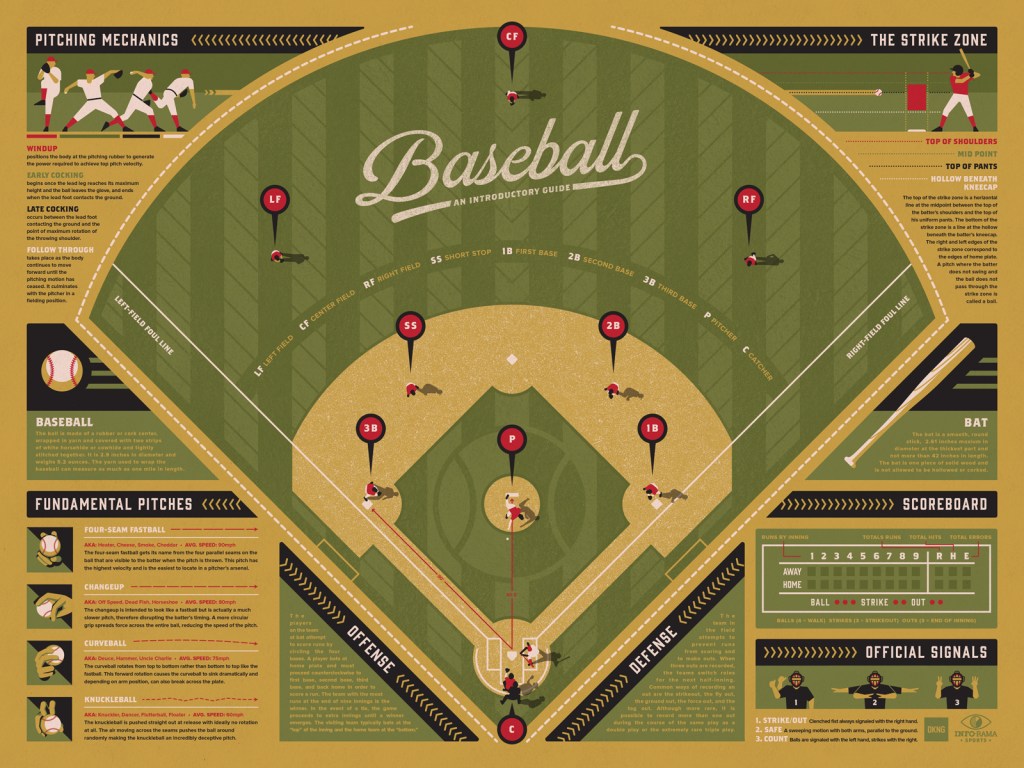
Baseball is a game played between two teams of nine players each. Each team takes turns batting and fielding. The batter stands in the batting box and tries to hit the ball thrown by the pitcher from the other team. If the ball is hit, the batter runs around the four bases in a counter-clockwise direction to score a run. The team with the most runs at the end of nine innings (when each team has had a chance to bat and field) is the winner. 

The teams that are in the field are divided into two groups. The first group is the infielders. Infielders are positioned around the inner edge of the diamond-shaped playing field. They include the pitcher, catcher, first baseman, second baseman, shortstop, and third baseman. The second group is the outfielders. Outfielders are positioned around the outer edge of the diamond-shaped playing field. They include the left fielder, center fielder, and right fielder. The third group is the designated hitter. The designated hitter is a player who bats in place of the pitcher.

The game is timed by Innings.  An inning is a rotation of both team fielding and batting.  The home team bats in the second half of the inning and the away team bats in the first half of the inning. In the course of an inning a team bats until there are 3 outs. A batter or player is deemed out when a defender gets the ball to another defender prior to an offense player reaching a base or a defender catches the ball after a hit prior to the ball touching the ground. Three outs in an inning ends a team’s chance to score, and three strikes on a batter also results in an out. A strike is called when a batter does not swing at a pitch and it is within the strike zone, while a ball is called when a pitch is outside the strike zone. A strike is also when a player swings at a pitch and misses.  The opposite of this is a ball (not to be confused with the object that’s thrown around).  If a pitch is thrown outside of the agreed upon zone, the batter is rewarded with a free look.  If a batter has 4 of these, they go to first base without having to make a hit.  

Baseball is a game full of nuance and outlying strategies.  Here are a few things you could see in every game.  

  • Stealing bases – A runner can attempt to advance to another base if the pitcher does not throw the ball in time. 
  • Force outs – When a runner is on a base, a fielder can force the runner out by throwing the ball to the base the runner is attempting to reach. 
  • Hit and run – The hit and run is a strategy where the runner attempts to advance while the batter attempts to hit the ball. 
  • Bunting – Bunting is an offensive strategy where the batter attempts to hit the ball in a way that it rolls slowly toward the infield, allowing the runner to advance. 
  • Pitching – Pitchers are able to throw the ball and have the ball do different movements.  They could throw it super fast and straight.  They can make the ball curve.  They can make it move without rotations.  All of these movements are designed to confuse the batter.

Baseball is also a game of numbers and stats.  A few statistics regularly followed are below.

  • Batting Average (BA): The number of hits divided by the number of at-bats. 
  • On-Base Percentage (OBP): The percentage of the time a batter reaches base safely, regardless of how he got there (hit, walk, hit by pitch, etc.). 
  • Slugging Percentage (SLG): The total number of bases (singles, doubles, triples, home runs) divided by the total number of at-bats.
  • On-Base Plus Slugging (OPS): The sum of a player’s on-base percentage and slugging percentage. 
  • Earned Run Average (ERA): The average number of earned runs a pitcher allows per nine innings. 
  • Walks Plus Hits Per Innings Pitched (WHIP): The average number of walks and hits allowed by a pitcher per nine innings. 
  • Strikeouts Per Nine Innings (K/9): The average number of strikeouts a pitcher has per nine innings. 
  • Win-Loss Record (W-L): A pitcher’s total number of wins and losses. 
  • Quality Start (QS): A start in which a pitcher goes at least six innings and allows three

Baseball is popular in many countries, especially in the Americas. In particular, it is a popular sport in the United States, Canada, Japan, the Dominican Republic, Cuba, Mexico, Puerto Rico, and Venezuela. It is also popular in several countries in Central and South America, as well as in some countries in Asia and the Caribbean.  I hope this primer will help you understand this beautiful game.

Keys to Coping:  7 Technique to help with Stress Management

        Tell me if this has happened to you? You’re sitting with your hands tightly gripped to the steering wheel, your stress level rising by the second.  You have exactly five minutes before you have to get to daycare, and there’s an accident creating traffic.  After you pick up your child (who may or may not have kept you up all night), you’ll have to go to the supermarket, rush home for dinner, bathe baby, put him or her to bed and then you have the rest of your life you have to manage!

          Life can be highly stressful.  The good news is that there are techniques you can use in order to bring your stress level under control.  Following is 6 ways to avoid both situational and general life stress:

  1. Rehearsing. 
    • Let’s say you are preparing for a job interview.  You can role play, with your spouse, roommate or friend playing the part of the interviewer and you as the interviewee.  In this way, you can practice your answers to likely questions.  Knowing what to expect in advance can help you to control your stress level in the actual moment.
  2. Empathetic Framing:
    • Let’s suppose you have had a disagreement with your co-worker.  You’re worried that you will never be able to enjoy camaraderie with your co-worker again.  Now, you’re freaked out that you’ve burned a bridge.  You’ll be much better off if you see the disagreement as a challenge you must simply work your way through.  Look at the debate as a discussion between two intelligent people.  Try your best to see the other person’s perspective.  In this way, you’ll be engaging in problem-solving rather than complaining, and your stress may be reduced because of it. 
  3. Anger Management: 
    • It is often not a particular situation, but your reaction to it, that causes your stress level to climb.  I remember Rage Against the Machine once claimed, “Anger is a gift”. I must disagree! Don’t let your anger control you. You have a choice to be angry or not, choose not. Anger is a choice. Your reaction to circumstance is a choice. Our ability to navigate this is what separates us from animals. Choose the way of solution vs anger and your stress will fall away like pounds after an Insanity workout!
  4. Try your best to curtail negative thinking:
    • Whenever a negative thought comes to mind, think the exact opposite positive version of that thought and stick with it.  Or if all your thinking is negative, just try to stop thinking. I’ll literally tell myself, stop thinking, stop thinking.  The idea here is to put an end to negative thinking—to, in effect, put it on the shelf so that you don’t have to worry about it.  You’ll be surprised how relaxed you feel, once you stop engaging in negative thinking. 
  5. Remember you are a 1 of 1:
    • Self-esteem matters.  Being hard on yourself can produce a great deal of stress.  Once you recognize that you are a person worthy of love, you will be better able to cope with the stressors that come your way. 
  6. Exercise:
    • It’s a proven fact that individuals who exercise have better outlooks on life. Go watch Legally Blonde if you need a reminder!
  7. Set and accomplish goals for yourself.  
    1. Perhaps you’ve always wanted to knit.  Now is your golden opportunity.  Or maybe you’d like to run a marathon by the end of the year (this is one I did and changed my life).  The important thing is to set goals, to commit to them and go out and achieve them.  Once you reach your goal, you will likely feel on top of the world.  As you make progress toward your goal, you could find your stress level subsiding.    

        Stress relief is an on-going process.  You can’t expect to reduce your stress-level permanently in one day.  But, by taking the steps listed above, you might find yourself better able to deal with stress on a daily basis.  Remember that you may not be in complete control of what happens to you on any given day, but you can control your reaction to it.  By focusing on the positive, putting an end to negative thinking, and setting goals for yourself, you should find your stress level declining.  With less stress to worry about, you’ll find that life is more enjoyable.  Even that daily commute to the day care center might become more tolerable.  

The Grown Ups Guide to Life Insurance

A nationwide study on life insurance recently completed by Forbes Learnvest revealed  that 57% of respondents owned life insurance.  Good news right,  however only 28% were “extremely confident” about their understanding of their coverage or how life insurance works. 66% of study respondents had a poor understanding of how they would access their money when their loved ones die.  A little side note, the insurance company would probably appreciate you not knowing how to access the money as well.

So let’s get down to the basics here.  Life insurance is a policy that will pay money to a named beneficiary (most likely spouse or children) upon your death. This is a vehicle to help protect your loved ones if you were to die before you got old. In most cases it provides cash to pay for your family to maintain their lifestyle and education expectations if one or both of the parents die while they are still raising children.  It could also be good to have if you are going to protect your loved ones from your financial obligations When you purchase the policy, you determine the amount of coverage you need. There are many types of life insurance available, let’s explore a few of them here.

FIRST: DO YOU EVEN NEED THIS?

If you ask a nail maker if you need nails, they’ll give you a hundred reasons why you need nails.  The same thing goes for life insurance salespeople!  In my opinion there is really one reason you are going to need life insurance, family.  If you have a family that is dependent on your resources for their well being and survival, you need life insurance.  Your children are going to be dependent upon you financially for at least 18 years (most likely more) and you want to hedge against them not being financially OK if something happens to you.  

How Much Do I Need?

An easy rule of thumb is you get enough to cover a large portion of your annual expenses and cover debts that are outstanding.  For example, you could add your mortgage, annual expenses and tuition costs for a 4 year institution and base you amount of coverage on this.  Of course, you may do more or less based on your budget or ability to self insure (the latter meaning you’ve done well, congratulations!).

TERM AND WHOLE AND UNIVERSAL LIFE

Universal life sounds like a church you may want to warn your friends about if they are going to join (I say this as a licensed internet minister of the Universal Life Church)!  In all seriousness, there are a few different types of life insurance policies in the market and the easiest way to distinguish b/w them is temporary vs permanent.  Let’s get into those differences now.  

Term insurance is the least expensive plan you will find on the open market.  There are typically 2 ways you can buy term insurance.  One is through your employer through your benefits package.  This will typically not be a large policy, but often the employer will allow 2-5 times your annual income and it’s very inexpensive.  If you have a need, this will get you part of the way there, very cheap!  The other way is to buy a 10, 20 or 30 year policy on the open market.  These policies, while not as cheap as your employers, are the least expensive manner in which to protect your family for financial loss if you die.  Let’s give a scenario to explain how this works.

First, an understanding of how Life Insurance companies decide how much they collect from you each month in exchange for how much your family gets if you die.  Remember, this could mess with your head a bit, but this is money you will NEVER see, but you are buying so those around you don’t suffer.  Now to the meat and potatoes.  Your monthly premiums are what you pay to insure the company pays if you die.  These rates with life insurance are typically based on your present age today, your health, your family history, whether or not you smoke or work in a dangerous industry or spend your spare time jumping out of airplanes and shooting off fireworks.  Those last 2 activities could get you denied coverage!

The gist here, the younger and healthier you are, the lower your risk is to the insurance company that you are going to die within the term of the policy and thus the less money you have to pay in insurance premiums.   The opposite is also a factor.  Let’s say Sarah is a 26 year old girl who works out, doesn’t smoke and eats food from Whole Foods everyday.  She’s a much lower risk than John who is 45, hasn’t exercised in 5 years and lives on a steady diet of Cheetos and Bud Light.  Who do you think is going to have more healthy years ahead.  Just don’t ask my dad because he’d swear that John will outlive Sarah!

When you buy term insurance, you are buying a set amount of time to insure yourself, at a specific amount of money, say $300,000 to $2,000,000 and it’s typically 10-30 years.  This is the most basic type of life insurance and the easiest to understand.  It’s very straightforward and unless you are working with a financial professional who has a deep understanding of overfunding insurance products for cash value pull outs, this is really the only type of life insurance you’ll need over time.  You die, family gets paid, you live, family keeps you!  

Whole life is a policy that does what it says, it’s going to protect you for your whole life.  The insurance company set’s a premium knowing that as long as you pay, they are going to have to pay out sometime.  It could be today, it could be in 50 years.  That said, they know they will have to pay and they set your premiums to reflect that.  That’s why whole life is so much more expensive than term.  The insurance company is placing a bet they only imagine they will lose, so they need to find a way to profit!

These policies are also unique in that they carry a cash value and allow you to borrow, tax-free, against the policy’s cash value during your lifetime. Of course, the policy’s cash value changes over time and is lower than the total sum of the death benefit it provides.  

I know your going to ask, so, how exactly does cash value accumulate in your permanent life insurance policy?

According to our friends at investopedia “When you make premium payments on a cash-value life insurance policy, one portion of the payment is allotted to the policy’s death benefit (based on your age, your health, and other underwriting factors). The second portion covers the insurance company’s operating costs and profits. The rest of the premium payment will go toward your policy’s cash value. The life insurance company generally invests this money in a conservative-yield investment. As you continue to pay premiums on the policy and earn more interest, the cash value grows over the years.”

They also go on to explain that in the early years, the cost of insuring you is lower so more of your cash value goes into the permanent cash feature.  Then as you get older, more of the premium is going to pay for the insurance.

There’s all types of things you could do with the cash, but I recommend a professional to help you out there!  I just remind you that Whole Life is designed to do just that.  A policy that can last your whole life.

Universal Life is the final type of policy we’ll address here.  Universal policies are similar to Whole Life policies in that they are permanent protection, however they’re a bit different.  They tend to run a little less expensive than Whole Life, but there’s a bit more complexity.  It’s not a set it and forget purchase, but if you put the work in, you could save over whole life insurance over time.  

There are multiple types of Universal policies on the market today and most of them are relatively complex.  If you are interested in a Universal policy, I’d recommend working with an advisor that yoy trust.  

Life Insurance plans also offer a series of optional add ons known as riders.  Here are a few of them to consider when looking at your policy.  Critical Illness and Chronic Illness riders are there to pay money if you get a critical illness or a chronic illness.  The critical illness rider is typically set amount of money for cancer, heart disease etc…  The chronic illness rider allows you to access your policy amount if a physician says you have 12 months to live or less.  Other riders include Accidental Death or Double indemnity if you die in an accident.  This basically means if you die with a certain accident or an accident period, your family gets much more money.  There are riders for spouses (insure your spouse), waiver of premium (if you are disabled and can’t work, the premiums are waived), Child term rider (insure your child) and Long Term Care riders.  LTC rider states that if you cannot do 2 activities of daily living, such as cleaning, using the restroom, moving yourself around, cooking for yourself etc., the policy will allow you to use your benefit amount to pay for someone to do these things for you.  It’s an expensive rider and a type of policy we’ll dig into in a later article, but it’s a great way to protect yourself against a long term care need. 

Life insurance is complicated! I recommend speaking to a broker or advisor to discuss your needs. The good news, you can throw a rock in a crowded space and hit a licensed life insurance rep! I hope this primer provided you the guidance to help make the process a bit less confusing!

The Best Damn Cinnamon Buns On The Planet

This recipe has been slightly tweaked from the Bread Illustrated Cook Book from America’s Test Kitchen.  This book has been instrumental in my baking journey and I can’t recommend it enough!  I don’t get a commission for this recommendation.

Cinnamon buns will bring a smile to anyone’s face, at any time.  This may not be a full on scientific fact, but I’ve yet to have someone disappointed when I bring Cinnamon buns for breakfast, desserts or as a snack.  Ever!  

These Cinnamon buns specifically have never disappointed.  From my first attempt to my most recent, they always kill!  I suppose it’s hard to go wrong with sugar, cinnamon, vanilla, cream cheese, flour and even more sugar!  These treats are a delight and will keep your family and friends happy for years to come.  Enjoy!

Ingredients (prepare before hand!)

Dough

  • 21.25 ounces all purpose flour
  • 2 ounces cornstarch
  • 2.25 teaspoons instant or rapid rise yeast
  • 1.5 teaspoons salt
  • 6 ounces whole milk at room temperature
  • 3 large eggs at room temperature
  • 3.5 ounces granulated sugar
  • 12 tablespoons unsalted butter (don’t use salted butter), softened at room temp

Filing

  • 10.5 ounces light brown sugar
  • 1.5 tablespoons ground cinnamon
  • .25 teaspoons salt
  • 4 tablespoons unsalted butter, softened at room temp

Glaze

  • 6.5 ounces confectioners sugar
  • 4.5 ounces cream cheese, softened
  • 1 tablespoon whole milk
  • 1.25 teaspoon vanilla extract
  1. For the dough: Whisk flour, cornstarch, yeast and salt together in the bowl of the stand mixer.  Whisk the milk, eggs and sugar in a liquid measuring cup until sugar has dissolved.
  2. Using the dough hook on low speed, slowly add the milky egg mixture to the dry mix and mix until cohesive dough starts to form and no dry flour remains.  This should take about 2 minutes and you should scrape the bowl down as needed.  Increase the speed to medium low and add the butter, 1 tablespoon at a time and continue until the butter is fully incorporated, smooth and elastic.  It should clear the sides of the bowl.  This should take about 8-9 minutes.  
    1. Pro Tip, make sure the butter is not cold, but at room temperature when you add to the mix.  If it’s cold it’ll take longer to break down and mix in.
  3. Transfer the dough to a lightly floured counter and knead by had to form a smooth and round ball.  This will take about 30 seconds.  You can also form the ball by hand.  Place the dough seam side down in a lightly greased bowl (you can use butter or oil, I typically just use a small bit of olive oil), cover with plastic wrap and let rise until doubled in size (around 2 – 3 hours).
  1. Make a foil sling for a 13X9 inch baking pan by folding long sheets of aluminum foil.  The first sheet of aluminum foil should be 13 inches wide and the second sheet should be 9 inches wide.  Lay the sheets of foil in a pan perpendicular to each other with extra foil hanging over the edges of the pan.  Push the foil to the corners and up the sides of the pan.  Smooth the foil fluch to the pan and cover with cooking spray or a small amount of olive oil.  The oil & spray will help flatten.
  1. For the filling:  Combine the sugar, cinnamon and salt into a bowl.  Press down the dough to deflate, then spread it to a lightly floured counter.  Press and roll the dough into an 18 – 20 inch square (the wider you go, the more margin for error when you roll it up).  Spread softened butter over the dough, leaving 1 inch border around the edges.  Sprinkle with sugar / cinnamon mixture, leaving a border at the edges and spread evenly.
  1. Roll the dough away from you into a firm cylinder, keeping the roll tight and snug by tucking it under itself as you go.  Push and pinch the seam closed and shape the cylinder as needed to be 18 inches in length with uniform thickness.  If there’s extra dough on each side, cut off with a serrated knife (this will help with uniform visual, eliminating “end pieces.”  Using the same serrated knife, cut the cylinder into 8 pieces and arrange the cut side down in the prepared pan.  Cover loosely with plastic and let the buns rise until doubled in size (about an hour, should take up most of the pan).  PREHEAT OVEN NOW to 365 degrees.  You can refrigerate the buns at this step in the process for about a day, let them sit at room temp for an hour if you decide to do this before cooking. 
  1. Bake the buns until they are golden brown and the filing is melted.  I’ve found this typically hits perfectly at 37 minutes, but start checking around 30 minutes in.  Rotate the dish at 15 minutes for an even cook.
  2. For the glaze:  While the buns are cooking using a fork, combine all the ingredients in a bowl until smooth and creamy.  Top the buns with the glaze after they’ve been out of the oven for about 15 minutes.  These are best served warm, but will be just as good if you transport them or warm up after refrigerating up to a few days later.  

25 things I’ve learned in my first 7 months of being a dad

1. Baby poop is ever changing and this is something every parent observes

2. Babies can eat normal food before they have teeth, such as strawberries, eggs and even little pieces of meat or chicken legs!

3. The parent taking care of the baby full time, at anytime, has the harder job

  • I said this to be nice when my wife was on maternity, but when I got to paternity, I realized work was actually an escape

4. My time is no longer mine 

5. Before your baby crawls, parenting is less intense.  Once they crawl, you’re now in charge of preventing accidents and worst.  

  • I hear this amplifies with walking and talking 

6. The best part of my day is when I get to snuggle with baby and we knowingly enjoy each other’s company

7. My long term thinking has changed completely 

8. I think about fitness to chase my kids around and be able to keep up with them for a longer period of time

9. The baby industrial complex makes something for everything baby

10. Baby proofing homes has yet to become high tech

  • Business idea – smart baby proof doors that can be all turned on and all turned off at the same time

11. If baby is crying, you’ll literally do anything to stop it

12. Everything you once judged parents for (binkie from floor to mouth, screens, baby covered in food), you end up doing

13. Anything you can do to make your child laugh, you will do repeatedly 

14. I will compete to have papa as the first word out of baby’s mouth 

15. I should have gotten a night nurse and I will for #2!

16. Much of what used to matter no longer does

17. Babies will pee on you many times during diaper changes – this is temporary 

18. Babies are supposed to sleep on their backs until they can roll, then they mostly sleep on their stomach

19.  Doing things with baby is always scary the first time, then becomes part of life – this ranges from going out to eat to traveling

20. Hangovers are no longer worth the price

21. Happiness is baby noises (koos, bahs and aaaahs)

22. Most of what gets us aggressive in life never changes – you’re hungry, tired or need to use the restroom 

23. Naps are gods gift, both taking them and when baby takes them

  • When the baby is new, you sleep when baby sleeps

24. You reflect on teaching someone else on how to be a good person and remember they’re going to watch you and model these behaviors 

25. Being a dad is the best!