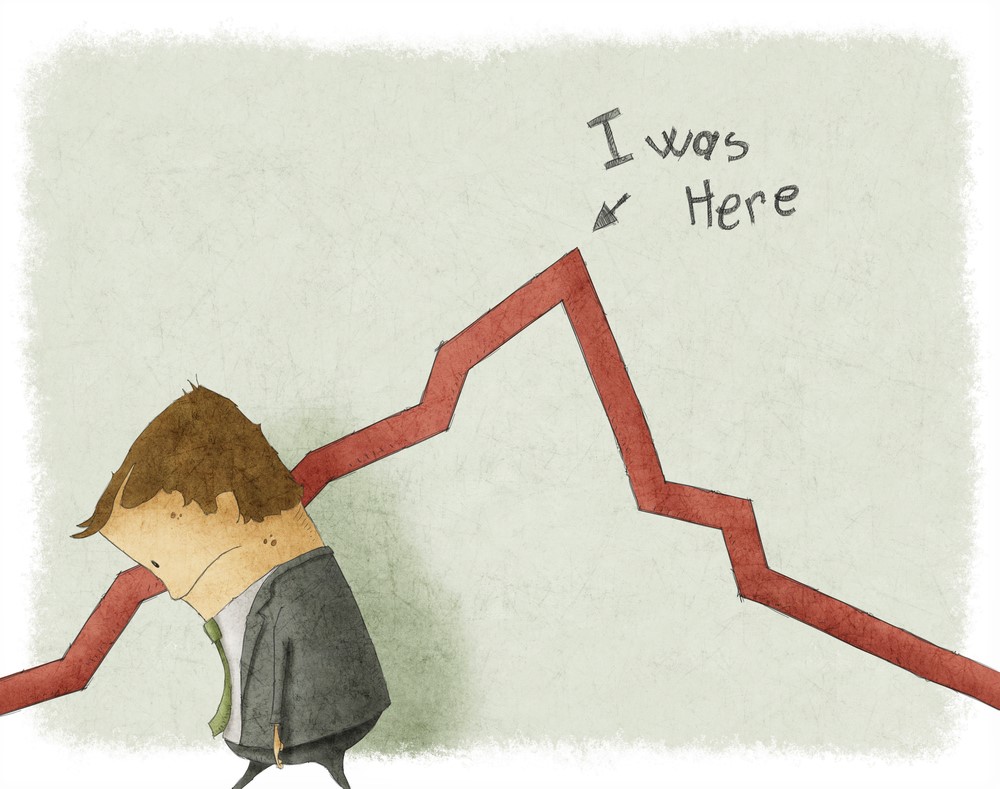
The Power of Perseverance: How These Great People Overcame Adversity to Achieve Success

We all face challenges in life, but what sets great people apart is their ability to push through adversity and come out stronger. In this post, we’ll explore the inspiring stories of Alexander the Great, Franklin D. Roosevelt, Nelson Mandela, and sports legends like Michael Jordan and Drew Brees, who overcame obstacles and achieved greatness.

Alexander the Great

Alexander the Great was a Greek king and military commander who conquered much of the known world in the 4th century BC. Despite the challenges he faced, Alexander remained a fearless and determined leader who was able to inspire his troops and overcome seemingly insurmountable obstacles. Some of the challenges he faced include:

  • His father was assassinated when he was 20 years old.
  • His army had to endure extreme temperatures, dangerous wildlife, and difficult terrain as they made their way across vast distances.
  • His conquests took him through harsh and unforgiving environments, including deserts, mountains, and swamps.

Franklin D. Roosevelt

Franklin D. Roosevelt was the 32nd President of the United States and is widely regarded as one of the greatest American presidents in history. He led the United States through some of its greatest challenges, including the Great Depression and World War II. Throughout his presidency he launched Social Security which was a safety net for older folks, a work program that put millions of people back to work and the FDIC which helped protect people from bank failures. Despite his achievements, Roosevelt faced significant challenges throughout his life, including:

  • Contracting polio at the age of 39, which left him paralyzed from the waist down.
  • Facing skepticism from many Americans who believed he couldn’t effectively lead the country from a wheelchair.

Nelson Mandela

Nelson Mandela spent 27 years in prison as a political prisoner fighting against apartheid in South Africa. He endured brutal imprisonment and isolation, confined to a tiny cell and forced to do hard labor in the blazing sun. Raised in a regime that removed black people from their homes in mixed-race neighborhoods and resettled them in townships on the outskirts of cities, he fought tirelessly to end apartheid and bring about reconciliation and unity in South Africa. 

Sports Legends

There are tireless examples of people in sports who overcame adversity. Michael Jordan didn’t make his high school team and went on to lead the Bulls to six rings and lead the conversation as the greatest of all time. Drew Brees tore his shoulder in San Diego and it was thought he’d never play football again. He went on to win a Super Bowl and was one of the greatest quarterbacks of this generation. Muhammad Ali lost 3.5 years of boxing because he refused to fight in Vietnam. Mario Lemieux came back and led his team to the Stanley Cup after being diagnosed with Hodgkin’s lymphoma.

No matter what obstacles you’re facing, remember that you have the power to overcome them. Take inspiration from these great people and never give up on your dreams.

I have never had to use Shakespeare – A focus on REAL Life Skills

As a grown man, there are a lot of life skills that you are not taught in school. This is unfortunate. Never in my life have I had to use Shakespeare, never. However I spent hours and hours in class and outside of class reading and analyzing his writing.

Maybe, just maybe, it’s time to start thinking about teaching life skills first and liberal arts skills last. Education should be approached like Maslow’s Hierarchy of needs. Maybe we should teach people how to survive before trying to get to enlightenment. Schools are taking the wrong approach.

Over the next series of HTBGM, we’re going to focus on life skills. I think the following 10 life skills are a great place to start. Let’s get you focused on the things that matter and save Shakespeare for a depressing, rainy, English day!

  1. Financial management: Budgeting, saving, investing, and managing debt.
  2. Health & Fitness: How to feed yourself and take care of your body
  3. Communication: Verbal and nonverbal communication skills, as well as the ability to listen actively and effectively convey ideas.
  4. Problem-solving: The ability to identify problems, generate solutions, and make decisions.
  5. Conflict resolution: This includes the ability to handle conflicts and disputes in a constructive and meaningful way.
  6. Interpersonal skills: This includes the ability to establish and maintain relationships with others, as well as to work effectively as part of a team.
  7. Survival Skills: How to take care of yourself when there’s no one else to take care of you and / or when shit goes down.
  8. Business Skills: How to survive and thrive at the workplace.
  9. Basic home maintenance: This includes skills such as changing a tire, fixing a leaky faucet, or replacing a light fixture.
  10. Emergency preparedness: This includes knowing how to respond to emergencies and natural disasters, and having a plan in place for these types of events.

Book Review – The Rise and Fall of the Third Reich by Willam Shirer

The Rise and Fall of the Third Reich is a comprehensive and engrossing historical account of the Nazi regime in Germany. Written in 1960, just 15 years post war, by William Shirer, a journalist who covered Germany during the time period. The book offers a firsthand perspective on the events that led up to World War II and the fall of the Nazi Party. It’s intense, long and not for the faint of heart. It’s also a necessary read for anyone that wants a detailed understanding of how a man, hitler, his party, the Nazi Party and an ideology, racial purity led the world into its deadliest war, ever (est 50+ million).

This book is not for the faint of heart. It’s a very long deep dive that is meticulous in it’s research and attention to detail. Shirer draws upon a wide range of sources, including primary documents, interviews, and published works, to provide a well-rounded view of the events of the time. I think what the book does a great job at illustrating is what happened to humanity during this time period.

The book does a great job at answering the following questions:

  • How did Hitler rise to power?
    • Shirer discusses the various factors that contributed to Hitler’s rise to power, including the economic and political instability in Germany following World War I, the propaganda and messaging used by the Nazi Party, and the weaknesses and divisions within the German government.
  • What was the Nazi Party’s ideology and how did it appeal to the German people?
    • The book delves into the ideology of the Nazi Party, including their belief in racial purity and the idea of the “Aryan master race,” and how these ideas were used to justify their actions and appeal to the German people.
  • How did the Nazi Party gain control of the government and implement their policies?
    • Shirer discusses the various tactics used by the Nazi Party to gain control of the government, including the use of violence and intimidation, and the ways in which they were able to manipulate the legal system and suppress opposition. He also covers the implementation of their policies, including their persecution of minority groups and the expansion of their territory through military conquest.
  • What was the role of other key figures in the Nazi Party, such as Joseph Goebbels and Heinrich Himmler?
    • The book covers the roles and responsibilities of other key figures in the Nazi Party, including Goebbels and Himmler, and their contributions to the party’s policies and actions.
  • How did the Nazi regime eventually fall and what were the consequences of their actions?
    • Shirer also covers the events leading up to the fall of the Nazi regime, including the Allied victory in World War II and the subsequent trials of top Nazi officials, as well as the long-term consequences of their actions, including the loss of life and the devastation caused by the war.

It details the various atrocities committed by the Nazi regime against the peoples of Europe during World War II. These include the Holocaust, in which millions of Jews, Romani, homosexuals, and others deemed undesirable by the Nazis were systematically murdered in concentration camps; the invasion and occupation of various European countries, including Poland, France, and the Soviet Union, which resulted in widespread destruction and the deaths of millions of civilians; and the forced conscription of millions of people into the German military or into forced labor camps.

There are several lessons that a person in 2022 could learn from reading The Rise and Fall of the Third Reich by William Shirer. Some potential examples include:

  • The dangers of authoritarianism and the importance of maintaining a healthy democracy
    • The rise of the Nazi Party and their eventual takeover of the German government serves as a cautionary tale about the dangers of allowing an authoritarian regime to gain power. The book illustrates the ways in which the Nazis were able to manipulate and control the population through propaganda and fear, and the consequences of this for the country and the world as a whole.
  • The importance of speaking out against injustice
    • The book also highlights the bravery of those who resisted the Nazi regime and spoke out against their actions, even at great personal risk. This serves as a reminder of the importance of speaking out against injustice and the power of individual action to make a difference.
  • The dangers of extremism and the importance of promoting tolerance and understanding
    • The Nazi ideology of racial purity and the atrocities committed against those deemed undesirable serve as a reminder of the dangers of extremist thinking and the importance of promoting tolerance and understanding between different groups of people.

How would you explain Baseball to an Alien?

Baseball is a game played between two teams of nine players each. Each team takes turns batting and fielding. The batter stands in the batting box and tries to hit the ball thrown by the pitcher from the other team. If the ball is hit, the batter runs around the four bases in a counter-clockwise direction to score a run. The team with the most runs at the end of nine innings (when each team has had a chance to bat and field) is the winner. 

The teams that are in the field are divided into two groups. The first group is the infielders. Infielders are positioned around the inner edge of the diamond-shaped playing field. They include the pitcher, catcher, first baseman, second baseman, shortstop, and third baseman. The second group is the outfielders. Outfielders are positioned around the outer edge of the diamond-shaped playing field. They include the left fielder, center fielder, and right fielder. The third group is the designated hitter. The designated hitter is a player who bats in place of the pitcher.

The game is timed by Innings.  An inning is a rotation of both team fielding and batting.  The home team bats in the second half of the inning and the away team bats in the first half of the inning. In the course of an inning a team bats until there are 3 outs. A batter or player is deemed out when a defender gets the ball to another defender prior to an offense player reaching a base or a defender catches the ball after a hit prior to the ball touching the ground. Three outs in an inning ends a team’s chance to score, and three strikes on a batter also results in an out. A strike is called when a batter does not swing at a pitch and it is within the strike zone, while a ball is called when a pitch is outside the strike zone. A strike is also when a player swings at a pitch and misses.  The opposite of this is a ball (not to be confused with the object that’s thrown around).  If a pitch is thrown outside of the agreed upon zone, the batter is rewarded with a free look.  If a batter has 4 of these, they go to first base without having to make a hit.  

Baseball is a game full of nuance and outlying strategies.  Here are a few things you could see in every game.  

  • Stealing bases – A runner can attempt to advance to another base if the pitcher does not throw the ball in time. 
  • Force outs – When a runner is on a base, a fielder can force the runner out by throwing the ball to the base the runner is attempting to reach. 
  • Hit and run – The hit and run is a strategy where the runner attempts to advance while the batter attempts to hit the ball. 
  • Bunting – Bunting is an offensive strategy where the batter attempts to hit the ball in a way that it rolls slowly toward the infield, allowing the runner to advance. 
  • Pitching – Pitchers are able to throw the ball and have the ball do different movements.  They could throw it super fast and straight.  They can make the ball curve.  They can make it move without rotations.  All of these movements are designed to confuse the batter.

Baseball is also a game of numbers and stats.  A few statistics regularly followed are below.

  • Batting Average (BA): The number of hits divided by the number of at-bats. 
  • On-Base Percentage (OBP): The percentage of the time a batter reaches base safely, regardless of how he got there (hit, walk, hit by pitch, etc.). 
  • Slugging Percentage (SLG): The total number of bases (singles, doubles, triples, home runs) divided by the total number of at-bats.
  • On-Base Plus Slugging (OPS): The sum of a player’s on-base percentage and slugging percentage. 
  • Earned Run Average (ERA): The average number of earned runs a pitcher allows per nine innings. 
  • Walks Plus Hits Per Innings Pitched (WHIP): The average number of walks and hits allowed by a pitcher per nine innings. 
  • Strikeouts Per Nine Innings (K/9): The average number of strikeouts a pitcher has per nine innings. 
  • Win-Loss Record (W-L): A pitcher’s total number of wins and losses. 
  • Quality Start (QS): A start in which a pitcher goes at least six innings and allows three

Baseball is popular in many countries, especially in the Americas. In particular, it is a popular sport in the United States, Canada, Japan, the Dominican Republic, Cuba, Mexico, Puerto Rico, and Venezuela. It is also popular in several countries in Central and South America, as well as in some countries in Asia and the Caribbean.  I hope this primer will help you understand this beautiful game.

35 things you should have at home and ready to independently survive a catastrophic event.

1. First aid kit

2. Flashlights

3. Batteries

4. Candles and matches

5. Cell phone and charger

6. Extra cash

7. Non-perishable food

8. Water purification tablets

9. Extra clothing and blankets

10. Fire extinguisher

11. Whistle

12. Portable radio

13. Emergency tools such as a wrench or pliers

14. Maps of the local area

15. Copies of important documents

16. Extra eyeglasses and/or contact lenses

17. Prescription medications

18. A working fire alarm

19. A list of emergency contact numbers

20. Sanitation supplies

21. Emergency shelter

22. A sturdy garbage can

23. A generator

24. A shovel

25. A multi-tool

26. A car emergency kit

27. Wood for a fireplace

28. Frozen proteins

29. Guns and Ammunition

30. An escape plan

31. Military Rations

32. A meeting point for your family if you’re ever separated and this happens

These Final 3 are ideal state if you have the financial means or network!

33. Have a coop farm you can escape to

34. Have a helicopter based close escape plan followed by a more long distance air plane plan

35. Have one of these locations in multiple continents

Do these 3 things and move ahead of 80% of your professional competitors

Success is the compounding of many small efforts that accumulate into a large return. It’s often been said of athletes that have been great for a long time such as Tom Brady, Kobe Bryant and Tiger Woods that they showed up every day and worked. They did the small things, over and over. They were some of the greatest performers in their crafts and they still showed up daily to do the small things. Greatness in the anvils of history belongs to those who repeatedly showed up and performed.

While we may not all be striving for a US Open or the Larry O’Brien trophy, we should all still be striving to get ahead. It’s been my approximation that in life, in order to get ahead of the back and be in the top 20% of performers at the work place, one must do three things. One must be on time, be a pleasure to be around and be good at their job. Notice, I didn’t say great at their job, simply be good. Let’s discuss the why of each of these attributes.

  1. Be On Time – Time is the only resource people will never get back. Money will come and go. Relationships will come and go. Life will have ups and downs and good times and bad. However, time escapes us all. If you disrespect someones time, you are saying that you have no respect for the other persons most precious and valuable resource. This goes for leaders and subordinates, the CEO’s and the Janitors. Titles are meaningless to time, everyone’s time is limited. Respect the time of others and you will immediately step up in the respect category of others.
  2. Be A Pleasure To Be Around – It’s often said that it takes fewer muscles to smile than frown, so don’t stress your face and turn that frown upside down! While that statistic may be a false one, it is a fact that people would rather be surrounded with good vibes than bad. If you bring positive energy with you, people will want to have you around. It can take work, but it’s work that will pay in dividends. Start your meetings with friendly hello, a light conversation that is typically good natured and a positive vibe to set a tone. Be a pleasure to be around and you’ll be more likely to keep moving ahead.
  3. Be good at your job – Yes, good is good enough, but it must be consistent. Do what needs to be done. Do it on time and deliver with a good attitude. If you do the work and provide a good service, consistently, you will be ahead of most. Consistency is hard. Every player in the NBA is good. You have to be to make it to the league. However, most guys in the league have a story of a competitor or teammate in their past, who they were convinced was the most talented player they’ve ever met, who simply didn’t make it because they weren’t consistently showing up and doing their job. If you are consistent and deliver a good product, you will get ahead.

If you combine the three characteristics above, you will be in the top of your class. It took me a long time to bring these things together in my own life. I’ve never had trouble being on time, it’s something I’ve always believed in. Yet, there have been periods in my life and career where I didn’t have a great attitude consistently or I didn’t consistently deliver a good product. It was during these times that I fell behind. However, when I’ve personally combined these characteristics, I’ve grown in my career faster than my counterparts.

Go forth, be timely, be pleasant and be good. I promise the return will be exponential!

Mastering the art of Self Control

Self control makes life easier. Once you have mastered self control, you have the power to take command of your emotions, mental processes, and behaviors. A strengthening ability empowers one to move forward to a brighter future. 

If it’s meant to be, it’s up to me.  Self reliance makes things easier.. When it comes to developing self control, you will need to find inner strength, visualize yourself in the scene, and affirm that you can accomplish your goals. Most people would agree that self control can be hard.  I was a young man in Los Angeles once, I get it, it’s tough! 

It still stands, if we keep pushing, hustle will be rewarded. We must continue to consider all aspects of our life. We all must strive to expand our skills and abilities. Self-development is the starting point of building self control. It is a continuous process. 

We must set goals in order to achieve a higher state of awareness. 

Attaining success is hard.  You have to be willing to do what others are not.  It’s easier to party instead of hustle.  It’s easier to not do than do.  It’s easier to sit back and wait for the right time.  However, the right time is always now.

The key to developing the inner you, is to make consistent decisions and keeping your goals in sight. See it and believe it, you can point your mind in the right direction of finding that inner self. That inner self is your plane ticket. 

You have inner strengths. Sit down and visualize your inner strengths. Take some more time to put your visualization in perspective, so that you can use this power to help you work through self-development. Move to use affirmations to assist your visualization with pushing your toward reaching the ultimate goal and on through self-development.  Don’t let up.  Control yourself and control your life!

A Very Practical Way to Deal with Financial Setbacks 

Dealing with financial setbacks and potential financial difficulties happens to people.  Some of the most successful people you’ve ever met have had setbacks before their financial freedom.  There are plenty of people that have financial setbacks and are not sure how to deal with the consequences that come along with it.  Here is a few practical ways to deal with this when it happens to you.

Your network is your net worth.  The people close to you want to help you.  Use your family and friends to talk to and help you through problems like this one.  Talking to them and getting their advice and/or support will help open opportunities.  Accept the support that they are willing to offer because these people care a great deal for you and your well being.

Set some achievable short term goals for yourself.  An example could be to make 10 phone calls to ask about opportunities per day. Taking the smaller steps and dealing with the tasks one at a time is something that will be a great help. You can scale these achievements.  Achieving is key.  You want to set goals for yourself that are going to make you feel good about who you are and what you do.  When it comes to money you need to figure out ways that you can make more of it.

Make sure that you are keeping things in the right perspective.  You should try to think about situations that are going to help you with your problems.  You can start by trying to avoid situations that are going to make things worse.  You have to keep a stable mind so that you are keeping everything in line and not making it more stressful on your life.

Making prudent spending choices is another helpful way to deal with the stresses of money.  You need to try and decide where you can save here and there.  Putting money aside or making better choices that are going to give you more options is something that you can do.  Thinking about making more money might be another good idea that will help you be more successful in dealing with your stresses with money.

You have an ability to hustle.  In fact, this is completely in your control.  You can hustle and work and go get it.  Your problems will  not go away on their own if you leave it for another day. You should work through your problems so that you are not left out in the cold.  You want to do anything that you can to be a happier and better person.  If you are thinking of ways that you can take on the challenges of money you will see how much better off you will be. 

The one thing to keep in mind is that you are not a failure and that you can hustle to make things better for you and your needs.  Go out and get it.  

The Grown Ups Guide to Life Insurance

A nationwide study on life insurance recently completed by Forbes Learnvest revealed  that 57% of respondents owned life insurance.  Good news right,  however only 28% were “extremely confident” about their understanding of their coverage or how life insurance works. 66% of study respondents had a poor understanding of how they would access their money when their loved ones die.  A little side note, the insurance company would probably appreciate you not knowing how to access the money as well.

So let’s get down to the basics here.  Life insurance is a policy that will pay money to a named beneficiary (most likely spouse or children) upon your death. This is a vehicle to help protect your loved ones if you were to die before you got old. In most cases it provides cash to pay for your family to maintain their lifestyle and education expectations if one or both of the parents die while they are still raising children.  It could also be good to have if you are going to protect your loved ones from your financial obligations When you purchase the policy, you determine the amount of coverage you need. There are many types of life insurance available, let’s explore a few of them here.

FIRST: DO YOU EVEN NEED THIS?

If you ask a nail maker if you need nails, they’ll give you a hundred reasons why you need nails.  The same thing goes for life insurance salespeople!  In my opinion there is really one reason you are going to need life insurance, family.  If you have a family that is dependent on your resources for their well being and survival, you need life insurance.  Your children are going to be dependent upon you financially for at least 18 years (most likely more) and you want to hedge against them not being financially OK if something happens to you.  

How Much Do I Need?

An easy rule of thumb is you get enough to cover a large portion of your annual expenses and cover debts that are outstanding.  For example, you could add your mortgage, annual expenses and tuition costs for a 4 year institution and base you amount of coverage on this.  Of course, you may do more or less based on your budget or ability to self insure (the latter meaning you’ve done well, congratulations!).

TERM AND WHOLE AND UNIVERSAL LIFE

Universal life sounds like a church you may want to warn your friends about if they are going to join (I say this as a licensed internet minister of the Universal Life Church)!  In all seriousness, there are a few different types of life insurance policies in the market and the easiest way to distinguish b/w them is temporary vs permanent.  Let’s get into those differences now.  

Term insurance is the least expensive plan you will find on the open market.  There are typically 2 ways you can buy term insurance.  One is through your employer through your benefits package.  This will typically not be a large policy, but often the employer will allow 2-5 times your annual income and it’s very inexpensive.  If you have a need, this will get you part of the way there, very cheap!  The other way is to buy a 10, 20 or 30 year policy on the open market.  These policies, while not as cheap as your employers, are the least expensive manner in which to protect your family for financial loss if you die.  Let’s give a scenario to explain how this works.

First, an understanding of how Life Insurance companies decide how much they collect from you each month in exchange for how much your family gets if you die.  Remember, this could mess with your head a bit, but this is money you will NEVER see, but you are buying so those around you don’t suffer.  Now to the meat and potatoes.  Your monthly premiums are what you pay to insure the company pays if you die.  These rates with life insurance are typically based on your present age today, your health, your family history, whether or not you smoke or work in a dangerous industry or spend your spare time jumping out of airplanes and shooting off fireworks.  Those last 2 activities could get you denied coverage!

The gist here, the younger and healthier you are, the lower your risk is to the insurance company that you are going to die within the term of the policy and thus the less money you have to pay in insurance premiums.   The opposite is also a factor.  Let’s say Sarah is a 26 year old girl who works out, doesn’t smoke and eats food from Whole Foods everyday.  She’s a much lower risk than John who is 45, hasn’t exercised in 5 years and lives on a steady diet of Cheetos and Bud Light.  Who do you think is going to have more healthy years ahead.  Just don’t ask my dad because he’d swear that John will outlive Sarah!

When you buy term insurance, you are buying a set amount of time to insure yourself, at a specific amount of money, say $300,000 to $2,000,000 and it’s typically 10-30 years.  This is the most basic type of life insurance and the easiest to understand.  It’s very straightforward and unless you are working with a financial professional who has a deep understanding of overfunding insurance products for cash value pull outs, this is really the only type of life insurance you’ll need over time.  You die, family gets paid, you live, family keeps you!  

Whole life is a policy that does what it says, it’s going to protect you for your whole life.  The insurance company set’s a premium knowing that as long as you pay, they are going to have to pay out sometime.  It could be today, it could be in 50 years.  That said, they know they will have to pay and they set your premiums to reflect that.  That’s why whole life is so much more expensive than term.  The insurance company is placing a bet they only imagine they will lose, so they need to find a way to profit!

These policies are also unique in that they carry a cash value and allow you to borrow, tax-free, against the policy’s cash value during your lifetime. Of course, the policy’s cash value changes over time and is lower than the total sum of the death benefit it provides.  

I know your going to ask, so, how exactly does cash value accumulate in your permanent life insurance policy?

According to our friends at investopedia “When you make premium payments on a cash-value life insurance policy, one portion of the payment is allotted to the policy’s death benefit (based on your age, your health, and other underwriting factors). The second portion covers the insurance company’s operating costs and profits. The rest of the premium payment will go toward your policy’s cash value. The life insurance company generally invests this money in a conservative-yield investment. As you continue to pay premiums on the policy and earn more interest, the cash value grows over the years.”

They also go on to explain that in the early years, the cost of insuring you is lower so more of your cash value goes into the permanent cash feature.  Then as you get older, more of the premium is going to pay for the insurance.

There’s all types of things you could do with the cash, but I recommend a professional to help you out there!  I just remind you that Whole Life is designed to do just that.  A policy that can last your whole life.

Universal Life is the final type of policy we’ll address here.  Universal policies are similar to Whole Life policies in that they are permanent protection, however they’re a bit different.  They tend to run a little less expensive than Whole Life, but there’s a bit more complexity.  It’s not a set it and forget purchase, but if you put the work in, you could save over whole life insurance over time.  

There are multiple types of Universal policies on the market today and most of them are relatively complex.  If you are interested in a Universal policy, I’d recommend working with an advisor that yoy trust.  

Life Insurance plans also offer a series of optional add ons known as riders.  Here are a few of them to consider when looking at your policy.  Critical Illness and Chronic Illness riders are there to pay money if you get a critical illness or a chronic illness.  The critical illness rider is typically set amount of money for cancer, heart disease etc…  The chronic illness rider allows you to access your policy amount if a physician says you have 12 months to live or less.  Other riders include Accidental Death or Double indemnity if you die in an accident.  This basically means if you die with a certain accident or an accident period, your family gets much more money.  There are riders for spouses (insure your spouse), waiver of premium (if you are disabled and can’t work, the premiums are waived), Child term rider (insure your child) and Long Term Care riders.  LTC rider states that if you cannot do 2 activities of daily living, such as cleaning, using the restroom, moving yourself around, cooking for yourself etc., the policy will allow you to use your benefit amount to pay for someone to do these things for you.  It’s an expensive rider and a type of policy we’ll dig into in a later article, but it’s a great way to protect yourself against a long term care need. 

Life insurance is complicated! I recommend speaking to a broker or advisor to discuss your needs. The good news, you can throw a rock in a crowded space and hit a licensed life insurance rep! I hope this primer provided you the guidance to help make the process a bit less confusing!


10 Benefits Of Travel – Get Out There

  1. The more people you meet around your country and around the world, the more you realize how similar we are and how different we aren’t.  People are people around the world.  They want to take care of their families, have positive relationships with others and typically enjoy good food and good times.  We aren’t that different. 
  2. The world is full of magical and diverse landscapes.  The more you see, the more you’ll value this planet’s beauty.  Blue warm waters, volcanoes (live and dormant), canyons, animal species, natural formations and night skies that light up green, blue and purple.  The world is a magical place
  3. Pushing your comfort zone makes you a stronger individual.  Traveling to new places forces you into the position of being an outsider.  When you return to your present place, you’ll have more empathy for the outsiders close to you.  EQ is a driver of personal growth and professional success. 
  4. If you travel to a foreign country and learn the language, you are lowering your risk of Dementia and Alzheimer’s in the future.  Learning new languages can also help you better understand your own language!
  5. Traveling increases your creativity.  You’ll be better able to “think outside of the box” because you’ll be spending time outside of yours!  This will make you automatically more creative.  
  6. Traveling boosts your confidence.  As you navigate new and strange situations, they become normal.  As you have events happen in life that could be outside of the norm for some folks, there’s a better chance you’ve experienced it!  The more familiar strange situations become, the more confident you will be in these situations.
  7. Traveling exposes you to more personalities.  If you have to deal with people for any part of your professional life, understanding personalities is a HUGE benefit.  As you travel, you begin to understand how culture drives people to act as they do.  This will help you in your future negotiations and relationships.
  8. Traveling gives you interesting stories to tell!  As you go through life, you’ll find interesting people like to be surrounded by other interesting people!  If you have a random story about riding an elephant through the bush or navigating a school of fish while snorkeling in Thailand, that’ll make folks want to hang out with you!
  9. Traveling allows you an opportunity to reflect internally.  How do you respond to being an outsider?  How are you navigating these new situations?  How are your nonverbal communication skills in a land where you don’t know the language?  Self recognition is an important part of self development, travel opens this part of your brain.
  10. Travel forces you to get out there.  You have to get on a plane or in a car and go somewhere.  You have to plan.  You have to create action to make the travel happen and then create a plan to make the travel worthwhile (site seeing, going out to eat, activities).  A body in motion stays in motion.  Start traveling and you may keep that action in your everyday life!