-
7 Statistics That I’m Concerned With Related To Boys
One in five men as of 2019 didn’t have a single close friend compared to 1 in 10 women in UK
3 times as many men have a public health funeral as women (buried alone with no one there)
Men are only 40% of the college enrollees in 2021
Men were 78% of the pandemic related college dropout/
28% of the men under 30 are reporting having no sex compared to 18% of women
Male testosterone levels have been dropping over the last multiple decades according to multiple medical journals with causes being unknown
Male economic fatigue has creeped into our marriage rates – The Hamilton Project at the Brookings Institution found that only half of the poorest men in America are married today, compared with 86 percent in 1970
-
Self Actualization Through Visualization and Action

According to Maslow’s hierarchy of needs, self-actualization represents the highest-order motivations. Those which drive us to realize our true potential and achieve our “ideal self.” Self Actualization requires vision. The vision requires repeated action to become a reality. Through the combination of vision and action, there are endless possibilities.
If you are looking to make something great of yourself, you need to set priorities and goals which will set you up for a better and bigger future. Alexander the Great was the first person called The Great because he envisioned a unified Greece and he did it. He was the first to actively pursue a unified world. What’s your unified world vision?
Life is exactly what you make out of it. You can write your own story. We all are. The question is are you willing to go and make it. Your potential is limitless. It’s action that takes effort.
If you want your goals and dreams to come to life, you must first know what your goals are, write them down and ask friends and family to help hold you accountable. Setting goals for the long term and short term is going to be one thing that makes your life better and easier because you are going to have something to strive for and known targets you are aiming at.
Never give up and pursue goals worth pursuing. They are what get you out of bed in the morning. Be prepared to work hard at your goals, nothing worth doing is ever achieved easily.
Genghis Khan once conquered Mongolia, China, Russia, Korea and Syria. He was in control. You need to recognize that you are the one that is in control of your life. When there is something that you really want to have, you should pursue it with ferocity. Nothing is scarier than a person motivated to do something with a single pursuited purpose.
I recommend the exercise of illustrating what you want and then creating the exact plan that needs to be executed to get there. Mahatma Gandhi wanted India to be independent from the oppression of their British colonialists. He understood in order to create a movement, he’d need to do so through unorthodox means that created sympathy to their struggle. By using non-violent means of protest and flexing the new medium of television, he could get the attention necessary to get the world behind his movement. He was in control and had a mapped out plan. You should always know that you are going to be in control of a situation. When you are not happy with something that you are doing you should go out there and make your life just how you want it to be.
Do not be afraid of your goals, of making them bigger and doing what you want to do in life. Make goals that are exciting, get you eager to take action and then go do the damn thing!. There is nothing out there that should stop.
From there, your attitude is your latitude. Stay positive, work through the hardships, create a plan and stick to it until you need to pivot. Visualize, take action and follow through. The rest will handle itself.
-
New Junkie Stress Disorder (TM Pending)
You’re constantly watching CNN for their coverage of the January 6th trials or the war in Ukraine. You spend days fixated on Fox News for their take on the U.S. Supreme Court’s Roe V Wade decision. You go down a reddit rabbit holes on Q, Hunter Biden and the latest shooting. You are plugged in.
If you can’t go a single day, nay hour, without knowing what’s going on and feel out of the loop if there is a news event that you are not familiar with, then you suffer from News Junkie Stress Disorder (I made the disorder up, trademark is pending!).
The desire to be informed is certainly a positive quality. After all, it’s in our genes. We had to know if there was a lion in a field far away or if danger lurked around the bush. Knowledge isn’t just power, it keeps us alive!
Also, in a democracy, there’s value in having an informed citizenry. Knowing about current events can help you to protect your property, improve your health and protect the lives of yourself and your family. People who ignore current events altogether do so at their peril.
However, being addicted to news is a huge cause of stress. Our ancestors had to know about the lions in a certain cave, but they didn’t have to know everything happening around their country or the globe at every second! That’s in addition to dealing with your own problems. If you combine Donald Trump, Joe Biden, a school shooting and your missed grocery store stop, you’re going to have a lot going on everyday!
If you have to be aware of the major issue of the day, everyday and combine that with the stress of life, it’s anxiety inducing. You might find yourself depressed, anxious, worried, fearful and apprehensive at all moments. It can be particularly troubling hearing about a news event and feeling as if you’re powerless to respond, because you are. That, paired on top of the rest of life, is way too much.
Let’s take a little quiz to see if you may be putting yourself into this category or news junkie stress disorder.. Do you watch more than two hours a day of cable news? Do you read more than one major paper? Do you listen to any news podcasts or news talk radio for more than an hour a day? Are you on the Internet for more than 2 hours a day, reading twitter headlines or Apple News or Google News?
If you answered “yes” to the preceding questions, you are in jeopardy of harming your emotional, spiritual and physical health through excessive stress. Watching television or listening to talk radio is not a passive experience, it takes a toll on your nerves. You become edgy. You feel high-strung. You might find it increasingly difficult to concentrate because you’re distracted by the latest bombing, or scandal. You become increasing irritability and can’t to stay calm in stressful situations.
Information overload is a stress inducing experience. There’s a reason military’s incorporate noises and lights in their interrogation processes. If you’re diagnosed with News Junkie Stress Disorder, you need to unplug. You have crossed the line from informed, and are now overwhelmed. It’s time to take steps to protect yourself against this stress.
I’m a fan of quitting cold turkey. This is how I quit smoking cigarettes many years ago, I just stopped. However, for those who need to taper, begin with limiting the amount of time you spend on cable news. Watch the headlines at the beginning of the day and the end. On occasion, you might want to catch a deep dive, in order to hear in-depth reporting of a particular issue. On those occasions, limit your time to an hour.
Also, cut the amount of time you spend on your phone hunting down headlines. In many cases, just knowing the headlines is enough. You don’t need the death toll minute-by-minute in order to form a viewpoint about the latest tragedy. In addition, reading just one major newspapers each day should provide you with enough information to have a good understanding of the major issues of the day. You don’t need multiple subscriptions. Most of the stories will be the same.
Being informed can give you a sense of power and awareness. There’s nothing wrong with wanting to be on top of the issues. But taking it too far can lead to extreme stress. If the news is becoming overwhelming, turn off the TV, turn off your phone, sit back and relax. You may want to go on a run, walk the dog, go to the park or shoot some hoops. You’ll most likely find that being outside and getting Vitamin D makes you happier than watching the news! I promise, if you step back your news consumption, your happiness will increase by the multiple of the time you stop consuming.
-
Do these 3 things and move ahead of 80% of your professional competitors

Success is the compounding of many small efforts that accumulate into a large return. It’s often been said of athletes that have been great for a long time such as Tom Brady, Kobe Bryant and Tiger Woods that they showed up every day and worked. They did the small things, over and over. They were some of the greatest performers in their crafts and they still showed up daily to do the small things. Greatness in the anvils of history belongs to those who repeatedly showed up and performed.
While we may not all be striving for a US Open or the Larry O’Brien trophy, we should all still be striving to get ahead. It’s been my approximation that in life, in order to get ahead of the back and be in the top 20% of performers at the work place, one must do three things. One must be on time, be a pleasure to be around and be good at their job. Notice, I didn’t say great at their job, simply be good. Let’s discuss the why of each of these attributes.
- Be On Time – Time is the only resource people will never get back. Money will come and go. Relationships will come and go. Life will have ups and downs and good times and bad. However, time escapes us all. If you disrespect someones time, you are saying that you have no respect for the other persons most precious and valuable resource. This goes for leaders and subordinates, the CEO’s and the Janitors. Titles are meaningless to time, everyone’s time is limited. Respect the time of others and you will immediately step up in the respect category of others.
- Be A Pleasure To Be Around – It’s often said that it takes fewer muscles to smile than frown, so don’t stress your face and turn that frown upside down! While that statistic may be a false one, it is a fact that people would rather be surrounded with good vibes than bad. If you bring positive energy with you, people will want to have you around. It can take work, but it’s work that will pay in dividends. Start your meetings with friendly hello, a light conversation that is typically good natured and a positive vibe to set a tone. Be a pleasure to be around and you’ll be more likely to keep moving ahead.
- Be good at your job – Yes, good is good enough, but it must be consistent. Do what needs to be done. Do it on time and deliver with a good attitude. If you do the work and provide a good service, consistently, you will be ahead of most. Consistency is hard. Every player in the NBA is good. You have to be to make it to the league. However, most guys in the league have a story of a competitor or teammate in their past, who they were convinced was the most talented player they’ve ever met, who simply didn’t make it because they weren’t consistently showing up and doing their job. If you are consistent and deliver a good product, you will get ahead.
If you combine the three characteristics above, you will be in the top of your class. It took me a long time to bring these things together in my own life. I’ve never had trouble being on time, it’s something I’ve always believed in. Yet, there have been periods in my life and career where I didn’t have a great attitude consistently or I didn’t consistently deliver a good product. It was during these times that I fell behind. However, when I’ve personally combined these characteristics, I’ve grown in my career faster than my counterparts.
Go forth, be timely, be pleasant and be good. I promise the return will be exponential!
-
Mastering the art of Self Control

Self control makes life easier. Once you have mastered self control, you have the power to take command of your emotions, mental processes, and behaviors. A strengthening ability empowers one to move forward to a brighter future.
If it’s meant to be, it’s up to me. Self reliance makes things easier.. When it comes to developing self control, you will need to find inner strength, visualize yourself in the scene, and affirm that you can accomplish your goals. Most people would agree that self control can be hard. I was a young man in Los Angeles once, I get it, it’s tough!
It still stands, if we keep pushing, hustle will be rewarded. We must continue to consider all aspects of our life. We all must strive to expand our skills and abilities. Self-development is the starting point of building self control. It is a continuous process.
We must set goals in order to achieve a higher state of awareness.
Attaining success is hard. You have to be willing to do what others are not. It’s easier to party instead of hustle. It’s easier to not do than do. It’s easier to sit back and wait for the right time. However, the right time is always now.
The key to developing the inner you, is to make consistent decisions and keeping your goals in sight. See it and believe it, you can point your mind in the right direction of finding that inner self. That inner self is your plane ticket.
You have inner strengths. Sit down and visualize your inner strengths. Take some more time to put your visualization in perspective, so that you can use this power to help you work through self-development. Move to use affirmations to assist your visualization with pushing your toward reaching the ultimate goal and on through self-development. Don’t let up. Control yourself and control your life!
-
A Very Practical Way to Deal with Financial Setbacks
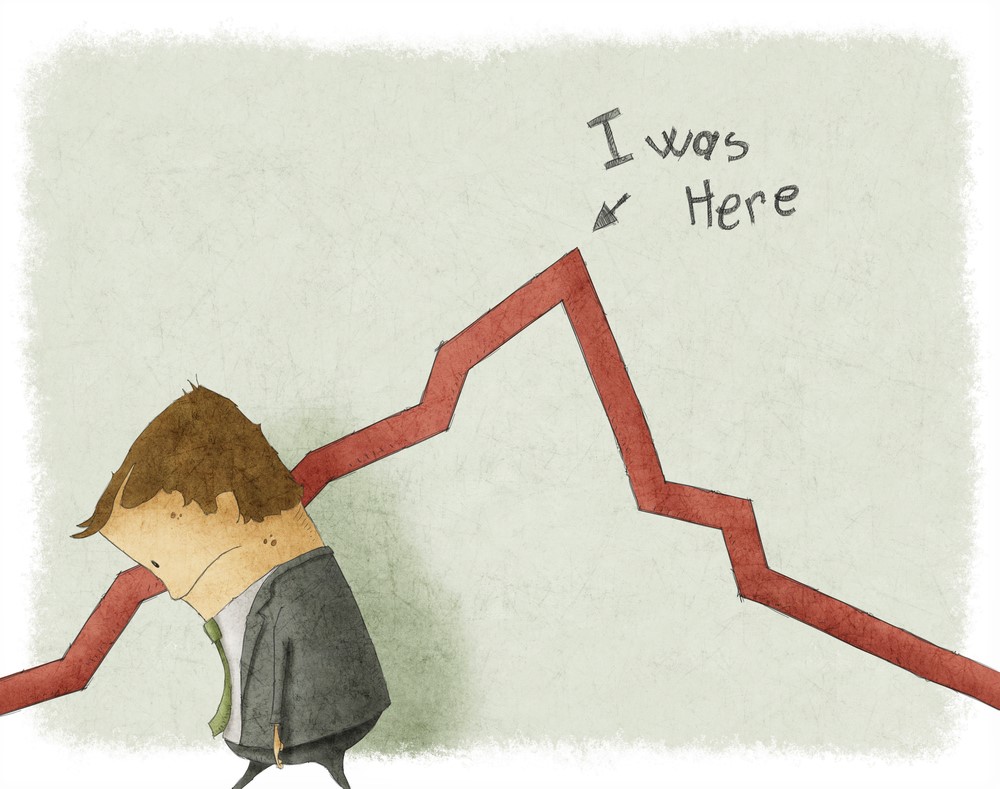
Dealing with financial setbacks and potential financial difficulties happens to people. Some of the most successful people you’ve ever met have had setbacks before their financial freedom. There are plenty of people that have financial setbacks and are not sure how to deal with the consequences that come along with it. Here is a few practical ways to deal with this when it happens to you.
Your network is your net worth. The people close to you want to help you. Use your family and friends to talk to and help you through problems like this one. Talking to them and getting their advice and/or support will help open opportunities. Accept the support that they are willing to offer because these people care a great deal for you and your well being.
Set some achievable short term goals for yourself. An example could be to make 10 phone calls to ask about opportunities per day. Taking the smaller steps and dealing with the tasks one at a time is something that will be a great help. You can scale these achievements. Achieving is key. You want to set goals for yourself that are going to make you feel good about who you are and what you do. When it comes to money you need to figure out ways that you can make more of it.
Make sure that you are keeping things in the right perspective. You should try to think about situations that are going to help you with your problems. You can start by trying to avoid situations that are going to make things worse. You have to keep a stable mind so that you are keeping everything in line and not making it more stressful on your life.
Making prudent spending choices is another helpful way to deal with the stresses of money. You need to try and decide where you can save here and there. Putting money aside or making better choices that are going to give you more options is something that you can do. Thinking about making more money might be another good idea that will help you be more successful in dealing with your stresses with money.
You have an ability to hustle. In fact, this is completely in your control. You can hustle and work and go get it. Your problems will not go away on their own if you leave it for another day. You should work through your problems so that you are not left out in the cold. You want to do anything that you can to be a happier and better person. If you are thinking of ways that you can take on the challenges of money you will see how much better off you will be.
The one thing to keep in mind is that you are not a failure and that you can hustle to make things better for you and your needs. Go out and get it.
-
Keys to Coping: 7 Technique to help with Stress Management

Tell me if this has happened to you? You’re sitting with your hands tightly gripped to the steering wheel, your stress level rising by the second. You have exactly five minutes before you have to get to daycare, and there’s an accident creating traffic. After you pick up your child (who may or may not have kept you up all night), you’ll have to go to the supermarket, rush home for dinner, bathe baby, put him or her to bed and then you have the rest of your life you have to manage!
Life can be highly stressful. The good news is that there are techniques you can use in order to bring your stress level under control. Following is 6 ways to avoid both situational and general life stress:
- Rehearsing.
- Let’s say you are preparing for a job interview. You can role play, with your spouse, roommate or friend playing the part of the interviewer and you as the interviewee. In this way, you can practice your answers to likely questions. Knowing what to expect in advance can help you to control your stress level in the actual moment.
- Empathetic Framing:
- Let’s suppose you have had a disagreement with your co-worker. You’re worried that you will never be able to enjoy camaraderie with your co-worker again. Now, you’re freaked out that you’ve burned a bridge. You’ll be much better off if you see the disagreement as a challenge you must simply work your way through. Look at the debate as a discussion between two intelligent people. Try your best to see the other person’s perspective. In this way, you’ll be engaging in problem-solving rather than complaining, and your stress may be reduced because of it.
- Anger Management:
- It is often not a particular situation, but your reaction to it, that causes your stress level to climb. I remember Rage Against the Machine once claimed, “Anger is a gift”. I must disagree! Don’t let your anger control you. You have a choice to be angry or not, choose not. Anger is a choice. Your reaction to circumstance is a choice. Our ability to navigate this is what separates us from animals. Choose the way of solution vs anger and your stress will fall away like pounds after an Insanity workout!
- Try your best to curtail negative thinking:
- Whenever a negative thought comes to mind, think the exact opposite positive version of that thought and stick with it. Or if all your thinking is negative, just try to stop thinking. I’ll literally tell myself, stop thinking, stop thinking. The idea here is to put an end to negative thinking—to, in effect, put it on the shelf so that you don’t have to worry about it. You’ll be surprised how relaxed you feel, once you stop engaging in negative thinking.
- Remember you are a 1 of 1:
- Self-esteem matters. Being hard on yourself can produce a great deal of stress. Once you recognize that you are a person worthy of love, you will be better able to cope with the stressors that come your way.
- Exercise:
- It’s a proven fact that individuals who exercise have better outlooks on life. Go watch Legally Blonde if you need a reminder!
- Set and accomplish goals for yourself.
- Perhaps you’ve always wanted to knit. Now is your golden opportunity. Or maybe you’d like to run a marathon by the end of the year (this is one I did and changed my life). The important thing is to set goals, to commit to them and go out and achieve them. Once you reach your goal, you will likely feel on top of the world. As you make progress toward your goal, you could find your stress level subsiding.
Stress relief is an on-going process. You can’t expect to reduce your stress-level permanently in one day. But, by taking the steps listed above, you might find yourself better able to deal with stress on a daily basis. Remember that you may not be in complete control of what happens to you on any given day, but you can control your reaction to it. By focusing on the positive, putting an end to negative thinking, and setting goals for yourself, you should find your stress level declining. With less stress to worry about, you’ll find that life is more enjoyable. Even that daily commute to the day care center might become more tolerable.
- Rehearsing.
-
You are what you dream yourself to be (A Poem)
You are what you dream yourself to be
Your actions push you through what you can’t see
it’s faith that gets impacted when your vision gets distracted when you forget it’s your responsibility
You are the direct result of your actions
It’s because of you that everything happens
If it is up to be, it is up to me, the work makes it what you imagine
You are what you believe you’ll become
It’s a rhythm that beats like a drum
Your self talk is strong, it moves you along, it’s from where your belief willl come from
You are what you dream yourself to be
It’s your job to go out and achieve
Be the change agent you want to see be and build the future we all want to see
-
The Grown Ups Guide to Life Insurance
A nationwide study on life insurance recently completed by Forbes Learnvest revealed that 57% of respondents owned life insurance. Good news right, however only 28% were “extremely confident” about their understanding of their coverage or how life insurance works. 66% of study respondents had a poor understanding of how they would access their money when their loved ones die. A little side note, the insurance company would probably appreciate you not knowing how to access the money as well.
So let’s get down to the basics here. Life insurance is a policy that will pay money to a named beneficiary (most likely spouse or children) upon your death. This is a vehicle to help protect your loved ones if you were to die before you got old. In most cases it provides cash to pay for your family to maintain their lifestyle and education expectations if one or both of the parents die while they are still raising children. It could also be good to have if you are going to protect your loved ones from your financial obligations When you purchase the policy, you determine the amount of coverage you need. There are many types of life insurance available, let’s explore a few of them here.
FIRST: DO YOU EVEN NEED THIS?
If you ask a nail maker if you need nails, they’ll give you a hundred reasons why you need nails. The same thing goes for life insurance salespeople! In my opinion there is really one reason you are going to need life insurance, family. If you have a family that is dependent on your resources for their well being and survival, you need life insurance. Your children are going to be dependent upon you financially for at least 18 years (most likely more) and you want to hedge against them not being financially OK if something happens to you.
How Much Do I Need?
An easy rule of thumb is you get enough to cover a large portion of your annual expenses and cover debts that are outstanding. For example, you could add your mortgage, annual expenses and tuition costs for a 4 year institution and base you amount of coverage on this. Of course, you may do more or less based on your budget or ability to self insure (the latter meaning you’ve done well, congratulations!).
TERM AND WHOLE AND UNIVERSAL LIFE
Universal life sounds like a church you may want to warn your friends about if they are going to join (I say this as a licensed internet minister of the Universal Life Church)! In all seriousness, there are a few different types of life insurance policies in the market and the easiest way to distinguish b/w them is temporary vs permanent. Let’s get into those differences now.
Term insurance is the least expensive plan you will find on the open market. There are typically 2 ways you can buy term insurance. One is through your employer through your benefits package. This will typically not be a large policy, but often the employer will allow 2-5 times your annual income and it’s very inexpensive. If you have a need, this will get you part of the way there, very cheap! The other way is to buy a 10, 20 or 30 year policy on the open market. These policies, while not as cheap as your employers, are the least expensive manner in which to protect your family for financial loss if you die. Let’s give a scenario to explain how this works.
First, an understanding of how Life Insurance companies decide how much they collect from you each month in exchange for how much your family gets if you die. Remember, this could mess with your head a bit, but this is money you will NEVER see, but you are buying so those around you don’t suffer. Now to the meat and potatoes. Your monthly premiums are what you pay to insure the company pays if you die. These rates with life insurance are typically based on your present age today, your health, your family history, whether or not you smoke or work in a dangerous industry or spend your spare time jumping out of airplanes and shooting off fireworks. Those last 2 activities could get you denied coverage!
The gist here, the younger and healthier you are, the lower your risk is to the insurance company that you are going to die within the term of the policy and thus the less money you have to pay in insurance premiums. The opposite is also a factor. Let’s say Sarah is a 26 year old girl who works out, doesn’t smoke and eats food from Whole Foods everyday. She’s a much lower risk than John who is 45, hasn’t exercised in 5 years and lives on a steady diet of Cheetos and Bud Light. Who do you think is going to have more healthy years ahead. Just don’t ask my dad because he’d swear that John will outlive Sarah!
When you buy term insurance, you are buying a set amount of time to insure yourself, at a specific amount of money, say $300,000 to $2,000,000 and it’s typically 10-30 years. This is the most basic type of life insurance and the easiest to understand. It’s very straightforward and unless you are working with a financial professional who has a deep understanding of overfunding insurance products for cash value pull outs, this is really the only type of life insurance you’ll need over time. You die, family gets paid, you live, family keeps you!
Whole life is a policy that does what it says, it’s going to protect you for your whole life. The insurance company set’s a premium knowing that as long as you pay, they are going to have to pay out sometime. It could be today, it could be in 50 years. That said, they know they will have to pay and they set your premiums to reflect that. That’s why whole life is so much more expensive than term. The insurance company is placing a bet they only imagine they will lose, so they need to find a way to profit!
These policies are also unique in that they carry a cash value and allow you to borrow, tax-free, against the policy’s cash value during your lifetime. Of course, the policy’s cash value changes over time and is lower than the total sum of the death benefit it provides.
I know your going to ask, so, how exactly does cash value accumulate in your permanent life insurance policy?
According to our friends at investopedia “When you make premium payments on a cash-value life insurance policy, one portion of the payment is allotted to the policy’s death benefit (based on your age, your health, and other underwriting factors). The second portion covers the insurance company’s operating costs and profits. The rest of the premium payment will go toward your policy’s cash value. The life insurance company generally invests this money in a conservative-yield investment. As you continue to pay premiums on the policy and earn more interest, the cash value grows over the years.”
They also go on to explain that in the early years, the cost of insuring you is lower so more of your cash value goes into the permanent cash feature. Then as you get older, more of the premium is going to pay for the insurance.
There’s all types of things you could do with the cash, but I recommend a professional to help you out there! I just remind you that Whole Life is designed to do just that. A policy that can last your whole life.
Universal Life is the final type of policy we’ll address here. Universal policies are similar to Whole Life policies in that they are permanent protection, however they’re a bit different. They tend to run a little less expensive than Whole Life, but there’s a bit more complexity. It’s not a set it and forget purchase, but if you put the work in, you could save over whole life insurance over time.
There are multiple types of Universal policies on the market today and most of them are relatively complex. If you are interested in a Universal policy, I’d recommend working with an advisor that yoy trust.
Life Insurance plans also offer a series of optional add ons known as riders. Here are a few of them to consider when looking at your policy. Critical Illness and Chronic Illness riders are there to pay money if you get a critical illness or a chronic illness. The critical illness rider is typically set amount of money for cancer, heart disease etc… The chronic illness rider allows you to access your policy amount if a physician says you have 12 months to live or less. Other riders include Accidental Death or Double indemnity if you die in an accident. This basically means if you die with a certain accident or an accident period, your family gets much more money. There are riders for spouses (insure your spouse), waiver of premium (if you are disabled and can’t work, the premiums are waived), Child term rider (insure your child) and Long Term Care riders. LTC rider states that if you cannot do 2 activities of daily living, such as cleaning, using the restroom, moving yourself around, cooking for yourself etc., the policy will allow you to use your benefit amount to pay for someone to do these things for you. It’s an expensive rider and a type of policy we’ll dig into in a later article, but it’s a great way to protect yourself against a long term care need.
Life insurance is complicated! I recommend speaking to a broker or advisor to discuss your needs. The good news, you can throw a rock in a crowded space and hit a licensed life insurance rep! I hope this primer provided you the guidance to help make the process a bit less confusing!
-
10 Benefits Of Travel – Get Out There

- The more people you meet around your country and around the world, the more you realize how similar we are and how different we aren’t. People are people around the world. They want to take care of their families, have positive relationships with others and typically enjoy good food and good times. We aren’t that different.
- The world is full of magical and diverse landscapes. The more you see, the more you’ll value this planet’s beauty. Blue warm waters, volcanoes (live and dormant), canyons, animal species, natural formations and night skies that light up green, blue and purple. The world is a magical place
- Pushing your comfort zone makes you a stronger individual. Traveling to new places forces you into the position of being an outsider. When you return to your present place, you’ll have more empathy for the outsiders close to you. EQ is a driver of personal growth and professional success.
- If you travel to a foreign country and learn the language, you are lowering your risk of Dementia and Alzheimer’s in the future. Learning new languages can also help you better understand your own language!
- Traveling increases your creativity. You’ll be better able to “think outside of the box” because you’ll be spending time outside of yours! This will make you automatically more creative.
- Traveling boosts your confidence. As you navigate new and strange situations, they become normal. As you have events happen in life that could be outside of the norm for some folks, there’s a better chance you’ve experienced it! The more familiar strange situations become, the more confident you will be in these situations.
- Traveling exposes you to more personalities. If you have to deal with people for any part of your professional life, understanding personalities is a HUGE benefit. As you travel, you begin to understand how culture drives people to act as they do. This will help you in your future negotiations and relationships.
- Traveling gives you interesting stories to tell! As you go through life, you’ll find interesting people like to be surrounded by other interesting people! If you have a random story about riding an elephant through the bush or navigating a school of fish while snorkeling in Thailand, that’ll make folks want to hang out with you!
- Traveling allows you an opportunity to reflect internally. How do you respond to being an outsider? How are you navigating these new situations? How are your nonverbal communication skills in a land where you don’t know the language? Self recognition is an important part of self development, travel opens this part of your brain.
- Travel forces you to get out there. You have to get on a plane or in a car and go somewhere. You have to plan. You have to create action to make the travel happen and then create a plan to make the travel worthwhile (site seeing, going out to eat, activities). A body in motion stays in motion. Start traveling and you may keep that action in your everyday life!

-
Subscribe
Subscribed
Have a WordPress.com account? Log in now.

